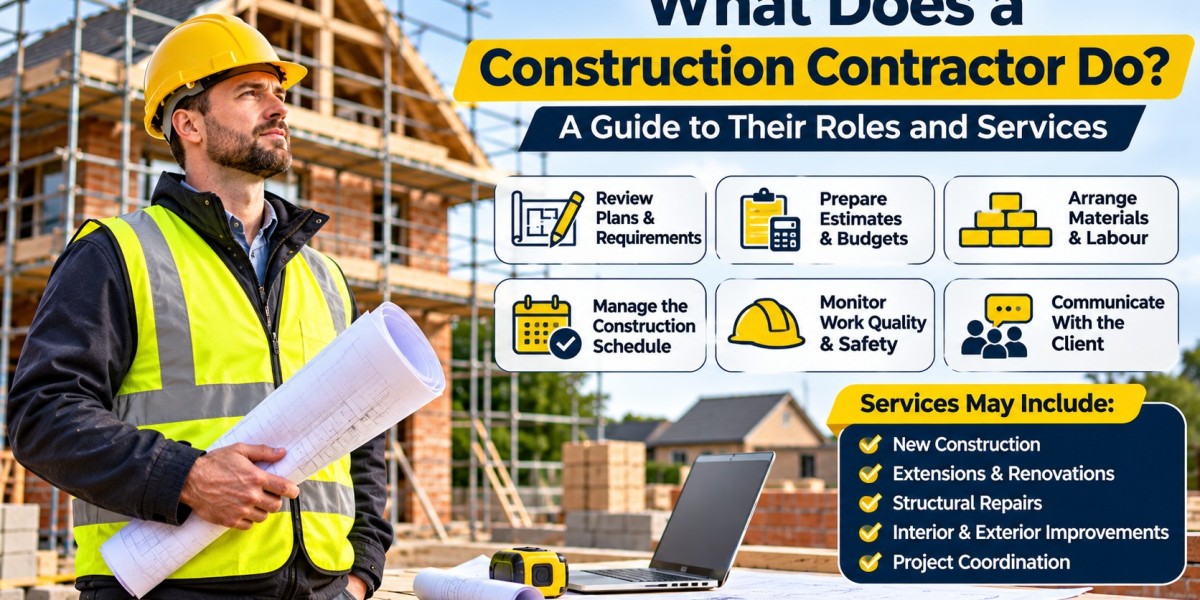

A construction contractor helps organise and manage the work needed to complete a building project. Depending on the agreement, they may arrange labour and materials, coordinate specialist trades, manage the schedule and check that the work follows the agreed plans.
If you are planning a new home, commercial building or renovation, understanding a contractor’s role can help you decide what support you need and what to confirm before hiring someone.
What Is a Construction Contractor?
A construction contractor is a person or company hired to carry out or manage construction work. Some contractors complete work with their own teams, while others coordinate subcontractors who specialise in particular trades.
A contractor’s responsibilities depend on the project, the services they provide and the terms of the contract. They may work on residential, commercial or industrial projects.
What Does a Construction Contractor Do?
A contractor’s role is to help organise the work and resources needed for a project. Common responsibilities may include the following.
1. Review Plans and Project Requirements
Before work begins, the contractor reviews the drawings, specifications, site conditions and client requirements. This helps them understand the project scope, identify the work involved and plan the resources needed.
2. Prepare Estimates and Project Costs
A contractor may estimate the cost of labour, materials, equipment and other expenses. The estimate helps the client understand the expected budget.
Before accepting it, check what is included, what is excluded and how changes or unexpected costs will be handled.
3. Arrange Materials, Equipment and Labour
Contractors may organise materials, equipment and workers for the project. They can also coordinate specialist trades such as electricians, plumbers, carpenters, roofers and tilers.
The contract should clarify who is responsible for purchasing materials and appointing subcontractors.
4. Coordinate the Construction Schedule
A contractor may plan the order of work and coordinate different teams so that one stage can follow another. They should also communicate about changes or delays that could affect the schedule.
5. Monitor Work Quality and Site Safety
Contractors may check that work follows the agreed plans and specifications. They also have responsibilities for managing site safety, depending on their role and the arrangements in place.
The client should confirm who is responsible for inspections, approvals and any required specialist checks.
6. Communicate With the Client
Regular updates help the client understand what has been completed, what is planned next and whether decisions are needed. Agree on a main contact and how progress updates will be shared.
Common Types of Construction Contractors
The type of contractor you need depends on the project.
General contractor: Usually manages the wider project and coordinates different trades.
Residential contractor: Works on homes, including new builds, extensions and renovations.
Commercial contractor: Works on buildings such as offices, shops and other commercial spaces.
Specialist contractor: Focuses on a specific trade or part of the work, such as roofing, electrical installation, plumbing or concrete.
Some companies provide several types of construction services, while others focus on a particular area.
What Services Can a Construction Contractor Provide?
Services vary by contractor and project. They may include:
New construction
Home extensions and renovations
Structural repairs and alterations
Interior and exterior improvements
Project planning and coordination
Arranging specialist trades
Finishing work and final checks
Before hiring a contractor, confirm which services are included in the proposal and which tasks will be completed by other professionals.
Construction Contractor vs. Subcontractor
A general contractor often manages the wider project and may appoint subcontractors to complete specialist work. A subcontractor is usually responsible for a defined part of the job.
For example, during a home renovation, the general contractor may coordinate the overall schedule while subcontractors carry out electrical, plumbing or tiling work.
The exact responsibilities depend on the project and the agreements between the parties.
How to Choose a Construction Contractor
Before appointing a contractor, take time to compare their experience, proposal and working arrangements.
Check relevant experience: Ask about projects similar to yours in size and type.
Review previous work: Look at completed projects and, where possible, speak with past clients.
Request a written proposal: Check the work scope, materials, costs, exclusions and payment terms.
Discuss the schedule: Confirm the expected start date, key stages and estimated completion.
Understand the contract: Review responsibilities, changes to the work, payments and how disputes will be handled.
Agree on communication: Confirm who your main contact will be and how often you will receive updates.
A written agreement helps both sides understand what has been agreed and can reduce the risk of misunderstandings.
Questions to Ask Before Hiring a Contractor
Before you appoint a construction contractor, consider asking:
Have you completed projects like mine?
What work is included in your proposal?
Who will manage the project day to day?
Will you use subcontractors, and who will coordinate them?
What is the expected schedule?
How will changes or unexpected costs be agreed?
What warranties or aftercare, if any, are included?
The answers can help you compare contractors and understand how they plan to manage the work.
Why Is a Construction Contractor Important?
Construction projects involve many connected tasks, from ordering materials to coordinating trades and checking completed work. A contractor can help organise these tasks and provide a clear point of contact.
The value of hiring a contractor depends on the project and the agreement. Before work begins, make sure you understand the contractor’s responsibilities, what you will need to manage and how decisions will be made.
Frequently Asked Questions
Is a construction contractor responsible for the whole project?
A general contractor often manages the overall project, but responsibilities depend on the contract. Some contractors handle only a specific part of the work.
Does a construction contractor provide materials?
Some contractors arrange materials as part of their service, while other agreements may require the client to purchase them. Confirm who is responsible and how material costs are handled.
What is usually included in a contractor’s estimate?
An estimate may include labour, materials, equipment and other project costs. Check whether it covers permits, waste removal, specialist trades and finishing work, or lists these as exclusions.
What is the difference between an estimate and a quote?
An estimate is an expected cost and may change as more details become available. A quote generally sets out a price for the specified work. Check the terms of the document before accepting it.
When should I contact a construction contractor?
It can be useful to speak with a contractor early, especially if you need help understanding the project scope, likely costs, schedule or coordination of different trades.
Final Thoughts
A construction contractor helps organise and manage the work involved in a building project. Their role may include reviewing plans, estimating costs, arranging labour and materials, coordinating trades and communicating with the client.
Before hiring someone, compare their relevant experience, written proposal, schedule and contract terms. A clear understanding of the work and each party’s responsibilities can help you make a more informed decision.