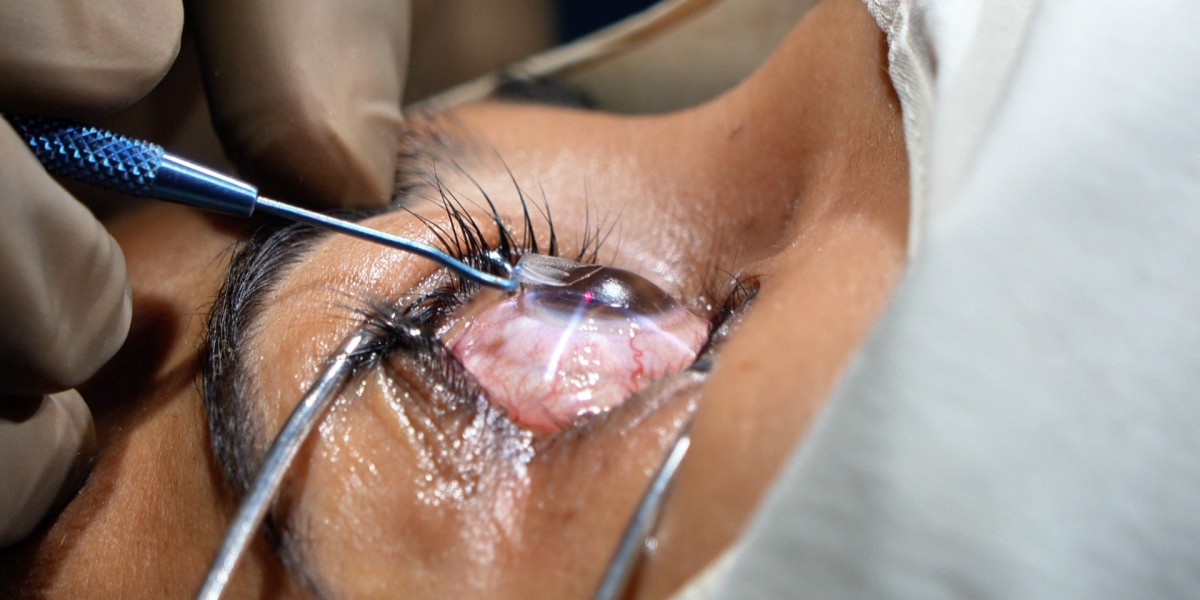

If everyday tasks like reading, cooking or driving at night have started to feel harder, a cataract could be the reason. The good news is that cataract surgery is one of the safest and most commonly performed procedures in modern medicine. The harder part is choosing between the techniques and lens options available today.
This guide explains what a cataract is, when to consider surgery, how Phaco, MICS and FLACS differ, and what cataract surgery in Delhi typically costs, so you can walk into your consultation with the right questions.
What Is a Cataract?
A cataract is a clouding of the eye's natural lens, which sits behind the iris and focuses light onto the retina. As the lens turns cloudy, less light reaches the retina and vision becomes blurred, dim or hazy, a little like looking through a fogged-up window.
Common causes and risk factors include:
- Ageing, the most common cause
- Diabetes, especially when blood sugar is poorly controlled
- Eye injury or trauma
- Prolonged UV exposure without eye protection
- Smoking and heavy alcohol use
- Long-term steroid use
Common Symptoms of Cataract
Watch for these signs:
- Cloudy, blurry or dim vision
- Glare and difficulty with night driving
- Sensitivity to bright light
- Needing more light to read
- Frequent changes in glasses prescription
- Faded or yellowish colours
- Double vision in one eye
A dilated exam and a slit lamp examination allow an ophthalmologist to confirm a cataract and judge how advanced it is.
Types of Cataract Surgery: Phaco vs MICS vs FLACS
Phacoemulsification (Phaco)
Ultrasound energy breaks the clouded lens into tiny fragments, which are removed through a very small incision. A foldable lens is implanted through the same opening, usually without stitches. It is the most widely used technique and delivers excellent results for most patients.
MICS (Micro-Incision Cataract Surgery)
MICS is a refined form of Phaco performed through an even smaller incision. Less tissue disruption can mean quicker visual recovery and lower post-operative astigmatism.
FLACS (Femtosecond Laser-Assisted Cataract Surgery)
In FLACS, a computer-guided femtosecond laser performs the most precision-dependent steps before Phaco begins:
- A precisely centred, circular opening in the lens capsule (capsulotomy)
- Pre-softening and fragmentation of the cataract, which can reduce the ultrasound energy needed
- Accurate arcuate incisions to help correct existing astigmatism
Save Sight Centre offers FLACS using the Ziemer FEMTO LDV Z8 platform, which the centre states is the only such system in North Delhi. Not every cataract needs laser assistance. Many patients do very well with standard Phaco or MICS, and the right choice depends on your cataract's density and your eye's anatomy.
Choosing the Right IOL (Intraocular Lens)
Because the natural lens is replaced permanently, your lens choice shapes your day-to-day vision as much as the surgical technique does.
- Monofocal: best for clear distance vision at the lowest cost. Reading glasses are usually still needed.
- Toric: best for patients with astigmatism. It corrects astigmatism during surgery.
- Multifocal / Trifocal: best for reduced dependence on glasses. Mild glare or halos are possible at first.
- EDOF: best for good intermediate range, such as driving and computer use. It causes fewer halos than some multifocals.
Your surgeon will weigh your age, work, hobbies, night-driving habits and screen time. For a deeper comparison, see this guide to intraocular lens options.
How Much Does Cataract Surgery Cost in Delhi?
Cost depends on the technique, the lens, the surgeon's experience and the hospital's infrastructure. Indicative per-eye ranges at Save Sight Centre are:
- Standard Phaco / MICS with monofocal IOL: ₹15,000 – ₹50,000
- EDOF IOL: ₹55,000 – ₹1,00,000+
- FLACS with Z8 laser: ₹60,000 – ₹1,00,000+
- Multifocal / Trifocal IOL: ₹70,000 – ₹1,20,000+
- Toric IOL: ₹44,000 – ₹1,20,000
These figures are indicative only. Final pricing depends on your diagnosis and is confirmed after evaluation, and consultation and test charges are separate. No-cost EMI is available, and major insurance companies, PSU, TPA and government plans are accepted, so check your policy coverage before surgery.
Complicated Cataracts Need Extra Experience
Dense or very hard cataracts, dislocated lenses, cataracts combined with glaucoma, post-trauma cataracts, and cataracts in eyes that have had retina or corneal surgery all call for a surgeon comfortable with complexity. At Save Sight Centre, Dr. Rajeev Jain, with over 20 years of experience, manages these cases, and the cataract team has performed over 50,000 surgeries.
How to Choose a Cataract Surgeon in Delhi
- Experience and surgical volume: ask how many cataract surgeries the surgeon performs
- Accreditation: look for NABH or ISO accreditation
- Technology range: Phaco, MICS and FLACS should all be available so the recommendation fits your eye, not the other way round
- Lens options: a good team explains the honest trade-offs of each IOL
- Transparent costs: you should get clear pricing and insurance guidance upfront
Final Thoughts
Cataract surgery can restore clear, confident vision, but the best outcome comes from matching the right technique and the right lens to your eyes and lifestyle. If you are noticing blurry vision, glare or frequent prescription changes, an early check-up is the best next step.
You can learn more about advanced cataract surgery options in Delhi or book a consultation at Save Sight Centre, located at A-14, G.T. Karnal Road, Adarsh Nagar, opposite Adarsh Nagar Metro Station, New Delhi.
Disclaimer: This article is for general information and is not medical advice. Please consult a qualified ophthalmologist to decide the most suitable procedure and lens for your eyes. Results vary from person to person.