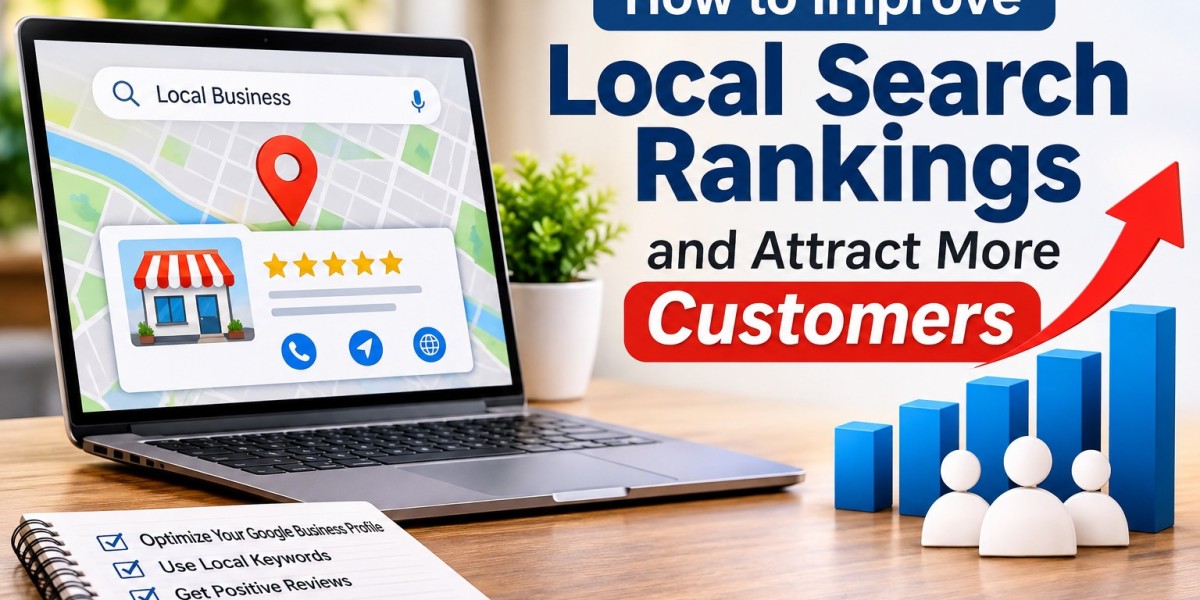

Getting found by nearby customers can make a major difference for a small business. When people search for a service, store, restaurant, contractor, or professional in their area, search engines try to show businesses that are relevant, trustworthy, and useful. Strong local visibility can bring more website visits, calls, directions, inquiries, and sales.
Improving local search rankings is not about adding the same keyword repeatedly to a website. It requires accurate business information, useful content, a strong online presence, positive customer experiences, and signals that help search engines understand where a business operates and what it offers.
What Are Local Search Rankings?
Local search rankings refer to where a business appears when someone searches for products or services connected to a specific location. For example, a person might search for “plumber near me,” “coffee shop in Lahore,” or “home appraiser in Chicago.”
Search engines evaluate several signals before deciding which businesses deserve prominent placement. These can include relevance to the search, business information, location, reviews, website quality, and overall online prominence.
Local results can appear in map listings, local packs, organic search results, and other location-based search features. Because customers often use these results when they are ready to take action, local visibility can be especially valuable for service-area and location-based businesses.
Keep Business Information Accurate Everywhere
Incorrect business information can create confusion for both customers and search engines. A business should maintain consistent details such as its name, address, phone number, website, business hours, and service information.
These details should be accurate on the main website as well as important business directories and local platforms.
If a phone number is different across several listings, or an old address remains online after a move, customers may lose confidence. Search engines may also have difficulty connecting different listings to the same business.
Regularly checking online business profiles can help identify outdated information before it becomes a larger problem.
Optimize the Google Business Profile
A complete and accurate Google Business Profile can help a local company communicate important information directly to potential customers.
Businesses should provide a suitable primary category, relevant secondary categories where appropriate, accurate hours, service details, website information, and high-quality photographs. Business descriptions should explain what the company does without turning the profile into a collection of repeated keywords.
Regular activity can also keep the profile useful. Adding legitimate updates, responding to questions, and keeping business information current gives customers more reasons to trust the listing.
The goal should be usefulness rather than constant promotional activity.
Build a Website That Supports Local Intent
A business website should make it easy for visitors and search engines to understand what the company offers and where it serves customers.
Important pages can include:
Service pages
Location pages
About page
Contact page
Frequently asked questions
Customer-focused educational articles
Service-area information
A location page should provide genuinely useful information about the area and the services available there. Simply replacing the city name throughout an identical page can create a poor user experience.
For example, a company serving multiple cities can explain which services are available in each location, common customer needs, service coverage, and relevant local information.
Create Content That Answers Local Questions
Useful content can support both traditional search and answer-focused search experiences. Instead of writing articles only to target keywords, businesses should address questions customers actually ask.
Examples include:
How much does a local service usually cost?
What should customers check before hiring a contractor?
How long does a particular service take?
What documents are required?
Which areas does the company serve?
What should someone do before scheduling an appointment?
Clear answers can make content more useful for readers and easier for search systems to understand.
This approach also supports semantic SEO because a well-written article naturally includes related concepts, services, locations, customer concerns, and terminology surrounding the main topic.
Earn Genuine Customer Reviews
Reviews can strongly influence how potential customers evaluate a local business. A steady flow of genuine customer feedback can improve trust and help people decide between competing businesses.
Businesses should make it easy for satisfied customers to leave honest reviews. However, reviews should never be purchased, fabricated, or manipulated.
Responding professionally to both positive and negative feedback is also important. A thoughtful response can demonstrate that the business values customer experience.
Reviews should be treated as part of reputation management rather than simply another ranking tactic.
Strengthen Local Citations and Business Listings
Local citations are online references to a business that may include its name, address, phone number, website, or other details.
Relevant directories can help establish a company's online presence, particularly when listings are accurate and associated with trustworthy platforms.
Quality matters more than creating hundreds of low-value listings. A smaller number of relevant, maintained profiles can be more useful than a large collection of outdated or unrelated directories.
Before creating a new listing, check whether the platform is relevant to the industry, location, or audience.
Make the Website Mobile Friendly
Many local searches happen on smartphones. A visitor who finds a business through search should be able to quickly read the information, call the company, find directions, or submit an inquiry.
A mobile-friendly website should load efficiently, use readable text, have simple navigation, and make important actions easy to find.
Clear contact information is particularly important for local businesses. A potential customer should not have to search through several pages just to find a phone number or service location.
Improve Page Speed and Technical SEO
Technical problems can make an otherwise useful website difficult to use. Slow pages, broken links, poor mobile layouts, missing page titles, indexing problems, and confusing navigation can all reduce the quality of the search experience.
Businesses should regularly check important technical elements and make sure search engines can access the pages that matter.
Structured data can also help communicate information about a business, organization, products, services, locations, and other entities when implemented correctly. It does not guarantee higher rankings, but it can make website information easier for search engines to interpret.
Build Local Relevance Naturally
Local relevance should appear naturally throughout the website. Service pages can mention genuine service areas, while location pages can explain what customers in those areas need.
For example, a landscaping company serving several nearby communities could create useful pages about seasonal lawn care, local weather considerations, common landscaping problems, and available services.
This creates a stronger connection between the business, its services, and the locations it actually serves.
Avoid creating pages for locations where the business has no meaningful presence. Search visibility should be based on genuine service coverage rather than artificial location targeting.
Track What Is Actually Working
Improving local visibility requires measurement. Businesses should monitor important indicators such as search impressions, website traffic, phone calls, direction requests, inquiries, conversions, review growth, and performance of important service pages.
A sudden increase in website traffic does not always mean business growth. The more useful question is whether visitors are taking valuable actions.
Tracking these outcomes helps identify which marketing activities deserve more attention and which ones need improvement.
Common Local SEO Mistakes to Avoid
Several mistakes can weaken a local search strategy. Common problems include inconsistent business information, duplicate listings, outdated opening hours, keyword stuffing, fake reviews, thin location pages, poor mobile usability, and publishing content that does not answer customer questions.
Another common mistake is trying to change everything at once. Local SEO usually works better as an ongoing process. Fix the most important issues first, measure the results, and continue improving the areas that have the greatest potential.
How Local Visibility Can Help Grow Your Business
Better local visibility can connect a business with people who are already searching for relevant products or services. When accurate listings, useful content, strong reviews, a helpful website, and a trustworthy reputation work together, customers have more reasons to choose the business.
The objective is not simply to appear at the top of a search result. The real goal is to turn visibility into meaningful customer actions.
A person who finds accurate information, sees positive customer experiences, understands the available services, and can easily contact the business is much closer to becoming a customer. That is why a well-planned local search strategy can support long-term growth.
Final Thoughts
Improving local search rankings requires more than inserting location keywords into website pages. Businesses need accurate information, relevant content, genuine reviews, strong business profiles, useful listings, technical quality, and a website that makes customer actions simple.
The strongest approach is to focus on providing reliable information and a good customer experience at every stage of the search journey. When those elements are consistently maintained, local visibility can become a valuable source of qualified traffic, inquiries, and opportunities to grow your business.