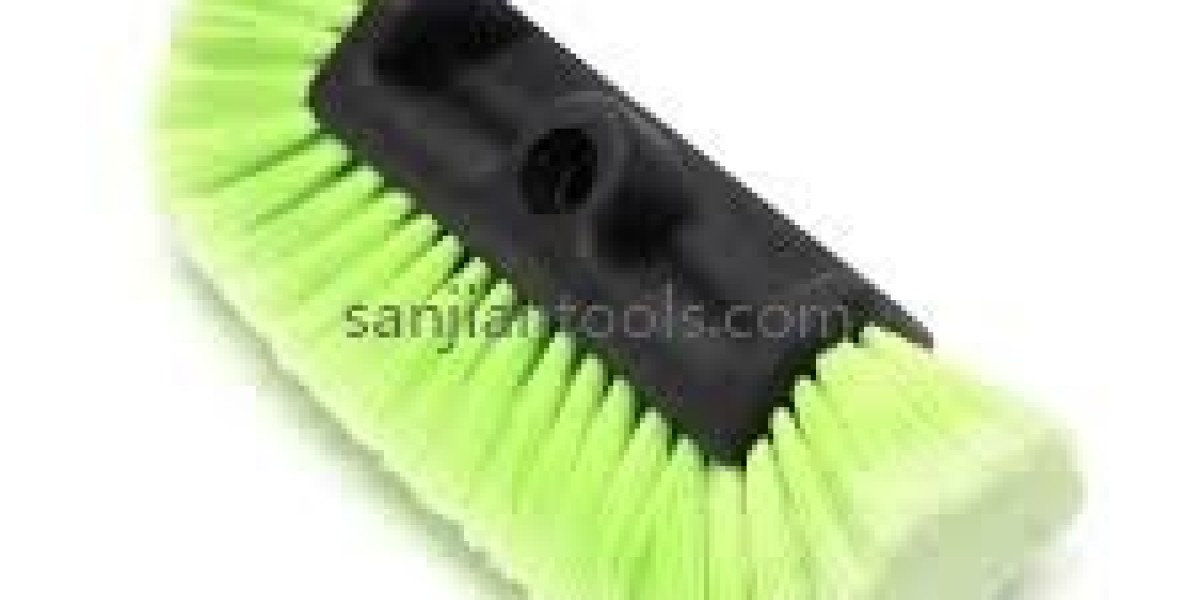

Maintaining clean floors in commercial and industrial environments often requires tools that can handle more than loose dust and light debris. Dried dirt, mud, grease residue, and accumulated contaminants may need mechanical scrubbing to loosen them from suitable surfaces. For facility managers, cleaning contractors, and wholesale distributors, a Stiff Floor Brush provides a practical solution for demanding floor maintenance tasks. Its performance depends on bristle material, stiffness, brush-head construction, handle design, and compatibility with the surface being cleaned.
Bristle material is one of the most important factors in floor brush manufacturing. Synthetic fibers are widely used because they can provide flexibility, moisture resistance, and convenient cleaning after use. Different fiber materials can be selected to achieve different levels of stiffness and resilience. Natural fibers may also be suitable for selected traditional brush designs and specific cleaning environments. Manufacturers should consider the expected working conditions when choosing materials, including exposure to water, detergents, and repeated contact with rough surfaces.
Bristle stiffness influences how effectively a brush loosens dirt. Firmer fibers can provide stronger mechanical contact with textured concrete, outdoor paving, and other durable surfaces. Softer fibers may be more appropriate for smoother flooring or routine cleaning where aggressive scrubbing is unnecessary. Excessive stiffness can scratch sensitive finishes, so the brush should always match the floor material. Testing on a small area is a sensible precaution when the surface type or coating condition is unfamiliar.
Brush-head construction affects cleaning coverage and maneuverability. A wide head can help users cover open floor areas with fewer passes, while a compact design may be easier to use around equipment, corners, and narrow spaces. Bristle density and distribution also influence surface contact. Consistent fiber placement supports balanced cleaning action, while a securely assembled brush head helps prevent premature loosening during normal use. These details are particularly important for professional cleaning teams that rely on tools throughout the working day.
Handle design contributes to comfort and operating control. Long handles allow users to clean larger areas while standing, reducing the need for repeated bending. Short-handled brushes can be more suitable for localized cleaning and restricted spaces. Plastic handles offer lightweight construction and can be produced in different shapes and colors. Wooden handles provide an alternative grip style for buyers who prefer traditional designs. In either case, the connection between the handle and brush head should remain secure under normal working pressure.
Manufacturing consistency is essential for producing reliable floor brushes. Fiber cutting, bristle insertion, brush-head assembly, handle finishing, and final inspection all influence the finished product. Uneven bristle lengths may create inconsistent contact, while weak attachment structures can affect durability. Quality checks can include examining bristle retention, handle stability, surface finishing, and conformity with approved product samples. For bulk purchasing, consistent manufacturing procedures help distributors receive products with predictable construction and appearance.
These brushes can serve various environments, including warehouses, workshops, garages, commercial kitchens, service areas, and outdoor maintenance spaces. Cleaning contractors may require different brush designs for textured concrete, tiled floors, and other durable surfaces. Hardware wholesalers can organize their product range according to bristle stiffness, handle length, and intended application. Clear product descriptions help customers distinguish between brushes for light sweeping and those intended for more intensive scrubbing.
Cleaning chemicals and operating conditions should also be considered. Some detergents may affect certain fiber or handle materials over time. Buyers should confirm material compatibility with the manufacturer when brushes are expected to be used with specific cleaning solutions. Users should follow the recommended cleaning method, remove accumulated debris after use, and store the brush in a suitable location. Proper storage helps prevent unnecessary bristle deformation and supports consistent performance.
For international distributors, packaging and customization can add value to a floor brush product range. Individual packaging may be appropriate for retail sales, while bulk cartons can simplify inventory handling for commercial suppliers. OEM projects may include customized handle colors, branding, labels, brush-head designs, and packaging artwork, depending on production capabilities. Buyers should confirm samples, material requirements, order quantities, packaging details, and delivery schedules before production begins.
A well-selected Stiff Floor Brush can support routine floor maintenance when its bristle stiffness, construction, and dimensions match the cleaning environment. Buyers should evaluate surface compatibility, handle comfort, and manufacturing consistency rather than selecting products based on stiffness alone. Businesses looking for additional brushes and hand tools can explore the product range at https://www.sanjiantools.com/product to support wholesale sourcing and product development.