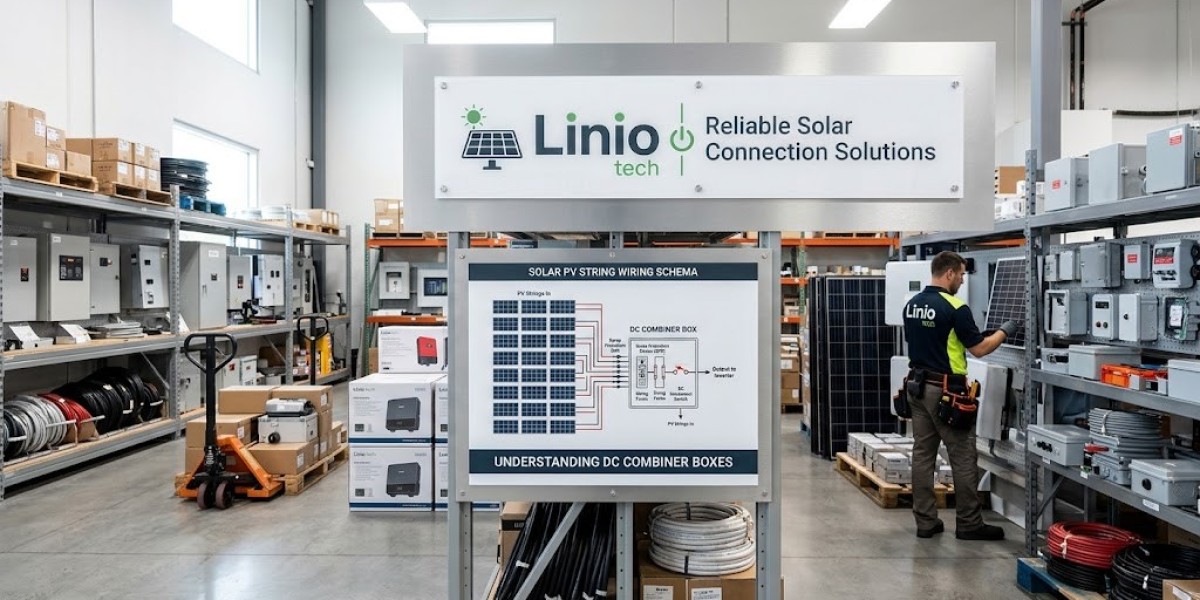

In the dynamic landscape of modern renewable energy, the solar photovoltaic (PV) system stands out as a leading solution for sustainable power generation. When moving beyond small-scale residential setups to robust commercial, industrial, or utility-scale solar farms, the complexity of managing energy flow increases exponentially.
A central component essential for managing this complexity is the DC Combiner Box. While it may appear to be a simple junction point, this engineered enclosure is the cornerstone of a safe, efficient, and cost-effective multi-string PV array.
This comprehensive guide explores the function, components, and critical benefits of DC combiner boxes, demonstrating why they are non-negotiable for large-scale solar projects.
Understanding the Role: What is a DC Combiner Box?
A DC Combiner Box is a specialized protective electrical enclosure used on the direct-current (DC) side of a solar PV system.
In small installations, solar panels are often wired together in a single string that feeds directly into the inverter. However, large systems generate massive amounts of power by utilizing many such strings, sometimes dozens, wired in parallel. The DC combiner box acts as the central hub where the individual positive and negative outputs from all these panel strings converge. Inside the box, these inputs are parallel-connected, merging their current to produce a single, unified main DC output that is routed to the central or string inverter.
Essentially, it converts multiple small source circuits into one large, high-capacity feeder circuit.
Why Do I Need a Combiner Box for Large Solar Arrays?
While it is theoretically possible to wire multiple strings in parallel manually without a consolidated unit, doing so is highly inefficient and creates significant safety risks.
Simplified and Efficient Cable Management
The most immediate benefit is logistically obvious. A 100kW commercial system might require 20 individual string runs. Without a combiner box, all 20 of these high-voltage DC lines (positive and negative) would need to be run, in conduit, across the roof or ground to the inverter. A DC combiner box, located near the array, merges these lines. Only one large, heavy-gauge master feeder conduit and cable set are then required to travel the distance to the inverter room or pad. This drastically reduces balancing-of-system (BOS) wiring, conduit, and labor expenses.
Critical Safety Protection (Overcurrent and Surge)
Solar arrays are high-voltage environments, with DC voltages often reaching 1000V or 1500V. They are exposed to environmental risks like lightning strikes. A properly engineered combiner box provides central, mandatory protection for the entire array. Without it, a faulted component within one string could potentially affect the operation or damage the entire system. Centralized fuse protection and surge protection devices located inside the box eliminate these risks.
Enhanced Troubleshooting and Simplified Maintenance
In large systems with many strings, finding a single underperforming panel or a wiring fault is incredibly difficult. Because all the strings converge within the combiner box, technicians can easily test and diagnose every individual string from one accessible location without having to trace wires through conduit across an expansive roof. Routine maintenance, like cleaning and checking connections, is also simplified.
Anatomy of a DC Combiner Box: Inside the Enclosure
A high-performance DC combiner box is far more than an empty metal container. It is a carefully populated assembly of specialized components:
DC Fuses and Fuse Holders
Every single incoming positive PV string is protected by a DC-rated fuse (and often a fuse on the negative line in floating systems). Fuses are vital because solar panels, unlike typical loads, can only source a limited amount of current (short-circuit current, Isc). If a string develops a short or is shaded, the other, more productive strings can potentially "backfeed" current into that faulted string. Fuses prevent this reverse current from reaching dangerous levels, protecting the wiring and the PV modules from overcurrent and potential thermal events.
DC Disconnect Switch (Isolator)
A mandatory safety feature, the main DC output passes through a high-capacity isolator switch. This allows the entire array to be completely and safely disconnected from the downstream inverter with a single action. This is crucial for emergency shutdowns or before any maintenance is performed in the inverter room.
Surge Protection Device (SPD)
Solar arrays are massive lightning rods. An SPD (often Type 2 or Type 1/2) is integrated into the combiner box. It monitors the voltage across the main busbars. If a transient voltage surge, such as from a near lightning strike, hits the DC lines, the SPD instantaneously becomes a low-impedance path, clamping the overvoltage and safely diverting the surge energy to the ground, protecting the inverter and sensitive system components.
Positive and Negative Busbars
Busbars are heavy-duty, high-conductivity copper or brass conductors where all the incoming fused lines are consolidated. The positive strings feed into one main busbar, and the negative lines into another, forming the combined DC circuit.
Intelligent Monitoring (Option: Smart Combiner Boxes)
Modern, advanced combiner boxes often include "smart" features. They integrate sensors to monitor the voltage and current of every individual string. This data is communicated, often via RS485 (Modbus) or wireless protocols, to the system’s SCADA (Supervisory Control and Data Acquisition) or web monitoring platform. Smart monitoring enables predictive maintenance and immediate, remote alerts if a single string underperforms or fails, maximizing energy yield.
Key Considerations for Selection and Design
Choosing the correct DC combiner box depends on the precise specifications of the solar PV system. Key parameters to define include:
System Voltage Rating: Ensure the enclosure and all internal components (fuses, SPDs, switches) are rated for your system's maximum open-circuit voltage (common ratings are 1000V DC or 1500V DC).
Number of Input Strings (Inputs): Define how many strings must be combined. Boxes are typically available from 4 strings up to 24+ strings.
Current Capacity (Main Output Amperage): The main busbars and disconnect must be sized to handle the cumulative current of all the parallel input strings combined.
Environmental Rating (Ingress Protection): Large combiner boxes are installed outdoors near the array. A rating of at least IP65 (NEMA 4/4X) is necessary to protect against rain, dust, and corrosion. Also see our guide.
Conclusion
A well-engineered DC combiner box is not just an optional accessory; it is the fundamental infrastructure that transforms hundreds of individual components into a cohesive, high-performance clean energy power plant. By consolidating wiring, providing critical high-voltage protection, and enabling efficient maintenance, it maximizes energy production and guarantees the safety of large-scale renewable investments. In an industry where efficiency and safety define success, specifying reliable components is non-negotiable. For optimized energy performance and elevated standards of safety, rely on the engineered solutions and proven durability of Linio Tech.