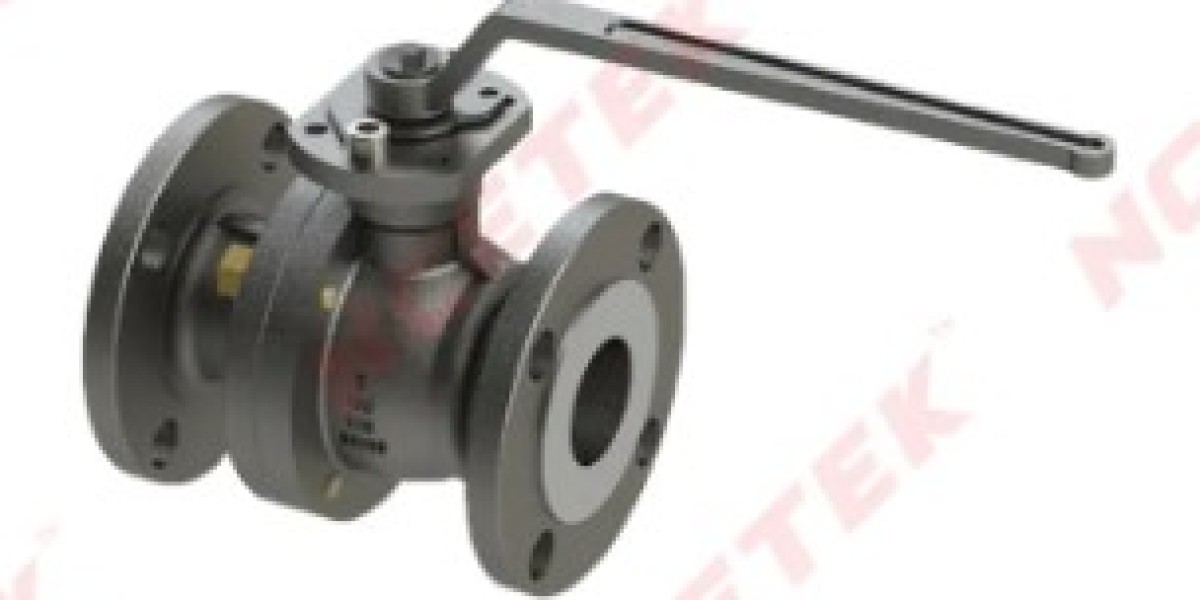

Industrial pipeline systems require reliable valves to isolate equipment, control fluid movement, and support maintenance operations. A Cast Steel Floating Ball Valve combines a cast steel pressure-containing body with a floating ball structure designed for suitable industrial services. Its selection should be based on the operating medium, pressure, temperature, connection requirements, and expected service conditions rather than product category alone.
A floating ball valve operates through a ball with a central bore. When the bore aligns with the pipeline, the medium can pass through the valve. Turning the ball by a quarter rotation places the solid surface across the flow path, allowing the seats to establish shut-off. In this design, the ball is not fixed by a trunnion support. Instead, it is supported by the seats and can move slightly under fluid pressure.
This movement allows pressure from the medium to help press the ball against the downstream seat when the valve is closed. The resulting contact can provide effective sealing in suitable operating conditions. However, the pressure load transferred to the seats increases with certain operating conditions, so floating designs must be selected according to size, pressure, and structural requirements.
Cast steel is commonly considered for industrial valve bodies because it can be manufactured into different shapes and configurations. The selected grade depends on pressure containment, temperature, corrosion exposure, and compatibility with the medium. Carbon steel may be suitable for many general industrial applications, while stainless steel or other alloy materials may be required for more specialized environments.
A Cast Steel Floating Ball Valve also depends on the quality of its internal components. The ball surface, stem, seats, seals, and other parts must work together to provide smooth operation and suitable shut-off performance. Soft-seat materials may be used for compatible fluids and operating temperatures, while alternative seat materials can be considered for other conditions. The correct choice requires evaluation of the medium's chemical properties and the expected operating range.
Pressure rating should not be considered separately from temperature. The allowable working conditions depend on the body material, wall design, connection type, and limitations of the seats and seals. Buyers should confirm model-specific pressure-temperature data and applicable standards before ordering. A nominal pressure class does not mean that the valve can operate at the same pressure under every temperature condition.
Connection design affects both installation and maintenance. Flanged ends are often used where convenient removal and replacement are required. Other connection arrangements may be available for specific pipeline layouts. Buyers should verify the relevant connection standard, dimensions, facing, and installation space. Correct interface matching can reduce site modifications and improve installation efficiency.
Operation is generally straightforward due to the quarter-turn mechanism. A manual handle may be suitable for accessible valves that do not require frequent remote operation. Gear operators can help manage operating effort in selected configurations, while pneumatic or electric actuators can support automation. Actuator selection should consider operating torque, pressure differential, cycle frequency, and control-system requirements.
Manufacturing quality involves several stages, including casting, heat treatment where required, machining, assembly, and inspection. The body and internal components need to meet the approved dimensional and material requirements. Pressure testing and seat-leakage testing are commonly included according to the applicable product standard or purchase specification. Buyers may also request material certificates, inspection reports, and traceability documentation.
Different industries place different demands on valve performance. Water treatment facilities may prioritize corrosion management and dependable isolation. Oil and gas installations may require particular pressure ratings and pipeline standards. Chemical plants need careful evaluation of media compatibility, while general process equipment may focus on operating convenience and maintenance access. The final valve configuration should reflect the complete operating environment.
Maintenance requirements should be considered before installation. Correct pipeline alignment and support help prevent unnecessary stress on the valve body and connections. Operators should avoid exceeding the approved pressure and temperature limits, and maintenance should follow the manufacturer's procedures. Depending on the medium, contamination and solid particles may also influence seat wear and operating performance.
For distributors, contractors, and plant operators, an effective purchasing decision combines material suitability, sealing requirements, and verified manufacturing quality. Buyers can review available valve products at https://www.ncevalve.com/product/ and provide their medium, pressure, temperature, connection, and operating requirements for further technical evaluation.