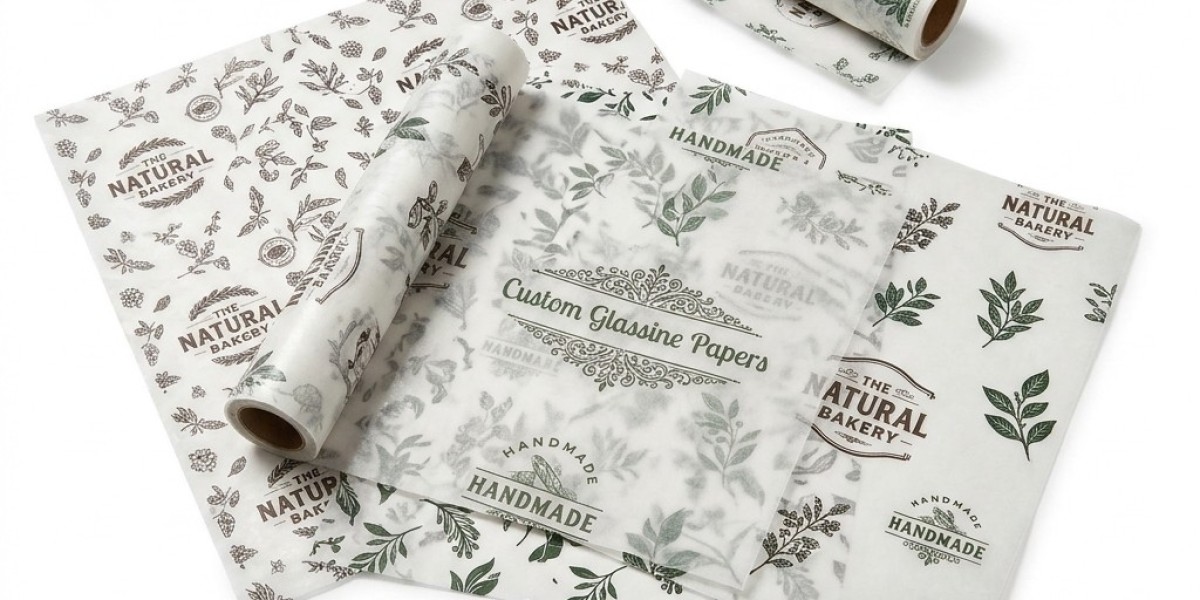

Packaging plays an important role in product protection, presentation, and customer experience. Businesses need materials that balance functionality, appearance, and cost without adding unnecessary complexity. Customized Glassine Papers offer a practical solution for food retailers, bakeries, cosmetics brands, and eCommerce businesses seeking reliable packaging with a refined finish.
Glassine is a smooth, dense paper made through a specialized manufacturing process. Its translucent appearance, grease resistance, and lightweight structure make it useful across several industries. When customized with brand colors, patterns, or logos, it can also support a consistent and recognizable packaging identity.
What Makes Glassine Paper Different?
Glassine paper is produced by pressing and refining paper fibers to create a smooth, compact surface. This process gives the material a distinctive appearance and useful barrier properties.
Unlike ordinary wrapping paper, glassine can resist grease and help protect products from dust and light handling. It is also flexible enough to wrap small items, separate products, and line packaging containers.
Its main characteristics include:
Smooth surface: Creates a clean and professional presentation.
Grease resistance: Helps manage oil transfer from suitable food products.
Translucent finish: Allows partial visibility of wrapped items.
Lightweight construction: Adds minimal weight to packaging.
Printable surface: Supports logos, patterns, and brand designs.
These features make it a useful option for businesses that need practical packaging without sacrificing presentation.
How Custom Glassine Papers Support Food Businesses
Food businesses often require packaging that protects products while maintaining an appealing appearance. Bakeries, confectionery shops, cafés, and takeaway outlets regularly handle items that can leave grease marks or lose their presentation during storage and transport.
Custom Glassine Papers can help address these concerns when the selected paper grade is suitable for the intended food application. Their grease-resistant qualities make them useful for wrapping cookies, pastries, sandwiches, confectionery, and other compatible products.
Better Food Presentation and Handling
A neat wrapper can improve how customers perceive a product. For example, a bakery can use Printed Glassine Paper to wrap individual cookies or line pastry boxes. A café may choose a simple branded design for takeaway food presentation.
The paper also helps separate certain food items inside boxes and bags. This can reduce direct contact between products and packaging surfaces, supporting cleaner handling practices.
However, glassine is not a universal food barrier. Businesses should confirm food-contact compliance, grease resistance, and suitability for the specific product before selecting a material.
Why Retail Brands Choose Personalized Glassine Paper
Glassine is not limited to food packaging. Retailers also use it to wrap small products, protect delicate surfaces, and improve the unboxing experience.
For jewelry, cosmetics, stationery, accessories, and gift items, Personalized Glassine Paper provides a simple way to add branded presentation. Its translucent finish creates a subtle reveal without completely hiding the product.
A retailer can use Branded Glassine Paper with a repeating logo pattern, while a boutique may select minimal artwork that matches its packaging theme. These details help create a consistent experience across product wrapping, shipping boxes, and shopping bags.
Building Recognition Through Custom Printing
A recognizable packaging design can strengthen brand recall. Custom Printed Glassine Paper allows businesses to incorporate:
Brand logos and business names
Signature colors and patterns
Minimalist illustrations
Seasonal designs
Product-specific graphics
For smaller retailers, even a simple logo can make packaging feel more considered. Larger brands can use coordinated designs across multiple packaging materials to maintain visual consistency.
Custom Printed Papers and Their Role in Modern Packaging
Packaging materials often work best when selected as part of a coordinated system. Customized Printed Papers give businesses flexibility to create consistent designs across wrapping sheets, liners, inserts, and other paper-based packaging components.
Glassine can form one part of that system. For example, a bakery may use printed glassine sheets inside pastry boxes and matching paper bags for takeaway orders. A cosmetics retailer might combine branded wrapping paper with protective inserts and Custom Printed Boxes to create a consistent presentation.
This approach connects product protection with brand identity. It also helps businesses maintain a recognizable appearance across retail shelves, delivery orders, and customer unboxing experiences.
Practical Applications Across Different Industries
The versatility of glassine makes it useful for businesses with different packaging requirements. Its application depends on paper specifications, product characteristics, and handling conditions.
| Industry | Common application | Business benefit |
|---|---|---|
| Bakeries | Wrapping cookies and pastries | Cleaner product presentation |
| Cafés | Food wrapping and basket liners | Consistent takeaway appearance |
| Jewelry retailers | Wrapping small accessories | Refined product presentation |
| Cosmetics brands | Wrapping selected beauty products | Improved unboxing experience |
| Gift shops | Decorative product wrapping | Better visual appeal |
| eCommerce stores | Product separation and inserts | Organized packaging |
These applications show how one material can support different packaging strategies. However, the correct grade and printing method should always match the intended use.
Choosing the Right Custom Glassine Paper
Selecting packaging involves more than comparing appearance or price. Buyers should evaluate how the material performs throughout storage, handling, packing, and delivery.
Before placing an order, businesses should consider the following factors.
1. Paper Weight and Thickness
Paper weight affects strength, flexibility, and handling. Lightweight sheets may suit small retail products, while heavier options may be more appropriate for applications requiring additional structure.
2. Printing Quality and Design
A clear, consistent print helps maintain brand presentation. Buyers should review artwork, logo placement, color accuracy, and print durability before approving production.
3. Food-Contact Requirements
Food businesses should confirm whether the selected paper meets relevant food-contact requirements. The material must also suit the product's moisture, oil content, and storage conditions.
4. Sheet Size and Packaging Format
Different products require different dimensions. Standard sheets, custom-cut formats, and rolls can support different packing operations and reduce unnecessary material waste.
5. Order Quantity and Budget
Businesses should compare unit pricing, minimum order quantities, setup costs, and storage needs. Ordering Custom Glassine Paper in Bulk may reduce per-unit costs, but large orders should match realistic demand.
Wholesale Glassine Paper: What Buyers Should Evaluate
Businesses purchasing packaging regularly may consider Wholesale Glassine Paper to maintain supply and manage costs. However, low pricing should not be the only selection criterion.
A reliable purchasing decision should consider:
Consistent paper quality across production batches
Clear specifications for thickness and dimensions
Printing accuracy and sample approval
Suitable packaging and storage conditions
Production lead times and reorder flexibility
Transparent pricing and minimum order quantities
A sample review can reveal issues that may not appear in a product description. It allows buyers to assess texture, flexibility, print quality, and practical performance before committing to a larger order.
Custom Glassine Paper Canada: Considerations for Canadian Businesses
Retailers and food businesses looking for Glassine Paper Canada options should evaluate supplier capabilities alongside material quality. Local availability, shipping arrangements, production timelines, and order requirements can influence the overall purchasing decision.
Businesses sourcing Custom Glassine Paper Canada solutions should also consider whether the selected material meets applicable Canadian food-packaging requirements when used with food. Documentation and clear product specifications can help purchasing teams make informed decisions.
For businesses with multiple locations, consistent specifications are especially important. Standardized paper sizes and approved artwork can help maintain packaging quality across branches and distribution points.
Common Mistakes to Avoid When Ordering Glassine Packaging
Even a suitable packaging material can create problems when specifications are unclear. A few purchasing mistakes can affect both costs and customer experience.
Common issues include:
Choosing based only on price: Lower-cost paper may not meet the required performance standards.
Ignoring product compatibility: Not every glassine grade suits every food or retail application.
Skipping print samples: Artwork may appear different when printed on the actual material.
Ordering unsuitable dimensions: Incorrect sizes can increase waste and slow packing operations.
Overlooking storage conditions: Poor storage may affect paper quality before use.
A clear specification sheet and sample approval process can prevent many of these problems.
Conclusion
Glassine paper offers a flexible packaging option for businesses that value product presentation, practical handling, and brand consistency. Its smooth surface, translucent appearance, and grease-resistant properties make it useful across selected food and retail applications. With the right specifications, Custom Glassine Papers can support cleaner packaging, recognizable branding, and more organized operations.
Successful packaging decisions depend on product compatibility, print quality, order quantity, and supplier reliability. Businesses that evaluate these factors can select materials that support both customer expectations and operational needs. For companies exploring dependable paper packaging options, Custom Papers Wholesale remains a practical name to consider when evaluating solutions for evolving packaging requirements.
Frequently Asked Questions
1. What are Custom Glassine Papers used for?
Custom Glassine Papers are used for wrapping, separating, and presenting selected food and retail products. Common applications include bakery items, confectionery, jewelry, cosmetics, and small accessories.
2. Is glassine paper suitable for food packaging?
Glassine can be suitable for certain food applications, particularly where grease resistance is useful. However, businesses should confirm food-contact compliance and product compatibility before use.
3. Can glassine paper be printed with a business logo?
Yes. Glassine Paper with Logo designs can include business names, brand colors, repeating patterns, and other artwork, depending on the supplier's printing capabilities.
4. What is the difference between glassine paper and regular wrapping paper?
Glassine is smoother, denser, and often more grease-resistant than ordinary wrapping paper. Its translucent finish also gives it a distinctive appearance.
5. Can businesses order Custom Glassine Paper in Bulk?
Yes. Many packaging suppliers offer bulk purchasing options. Buyers should compare minimum order quantities, unit costs, production timelines, and storage requirements.
6. Is glassine paper recyclable?
Glassine is generally paper-based and may be recyclable where local recycling facilities accept it. Recycling suitability can depend on coatings, inks, contamination, and local collection rules.
7. How should businesses choose the right glassine paper?
Buyers should evaluate paper weight, dimensions, printing quality, intended application, food-contact requirements, and supplier reliability before placing an order.




