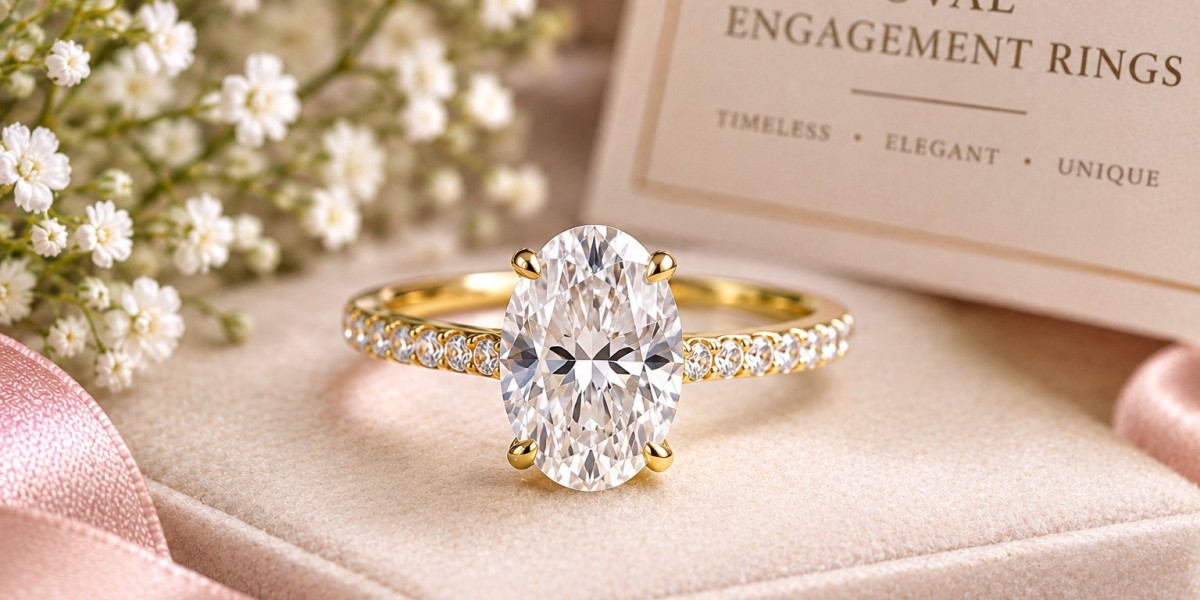

Choosing an engagement ring is a personal decision, and the shape of the centre stone can make a significant difference to its overall appearance. Some people prefer the traditional brilliance of a round diamond, while others are drawn to elongated shapes that offer a softer and more distinctive look. Oval diamonds combine the graceful outline of an oval with the sparkle associated with brilliant-cut diamonds, making them a popular choice for modern and classic jewellery designs. Oval engagement rings are available in a variety of settings, metals, and styles, allowing couples to find a design that reflects their preferences, fits their budget, and feels comfortable for everyday wear.
What Are Oval Engagement Rings?
Oval engagement rings feature a central gemstone with an elongated, rounded shape. When the centre stone is a brilliant-cut oval diamond, its faceting is designed to reflect light and create sparkle similar to that of a round brilliant diamond.
The oval shape offers a distinctive alternative to round, princess, pear, and emerald-cut stones. Its curved outline creates a balanced appearance without sharp corners, while its elongated proportions can make the finger appear longer.
Oval engagement rings are available with natural diamonds, lab-grown diamonds, and coloured gemstones. Some designs feature a single centre stone, while others include diamond halos, side stones, or decorative bands.
The final appearance depends on more than the stone's shape alone. Length-to-width ratio, cut quality, setting height, metal colour, and the size of the centre stone all influence how the ring looks when worn.
Why Are Oval Diamond Engagement Rings So Popular?
Oval diamonds offer a combination of brilliance, versatility, and distinctive proportions. Their elongated shape works with many different jewellery styles, from simple solitaire rings to elaborate vintage-inspired designs.
One reason people choose oval diamonds is their visual presence. Because the shape is elongated, an oval diamond may appear larger face-up than a round diamond of the same carat weight, although the actual appearance depends on its dimensions, cut, and proportions.
Oval diamonds also have a soft, balanced outline that suits both traditional and contemporary settings. They can look elegant in a simple gold band or more decorative when surrounded by smaller diamonds.
Another advantage is their versatility. An oval centre stone can be paired with yellow gold, white gold, rose gold, or platinum, depending on the desired appearance.
However, not every oval diamond looks the same. Some appear long and narrow, while others have fuller, rounder proportions. Comparing several stones in person or through high-quality videos can help you identify the shape you prefer.
Which Oval Engagement Ring Styles Should You Consider?
Oval engagement rings come in a wide range of designs. The best option depends on whether you prefer simplicity, additional sparkle, decorative details, or a more individual appearance.
1. Oval Solitaire Engagement Rings
Oval solitaire rings feature a single oval centre stone without a surrounding halo or additional side diamonds. This design allows the shape and brilliance of the centre stone to remain the main focus.
Solitaire settings are suitable for people who appreciate understated jewellery. A simple band can also make the ring easier to pair with different wedding bands.
The setting itself can influence the overall style. Four-prong settings offer a clean appearance, while six-prong designs may provide additional points of contact for securing the stone, depending on their construction. A bezel setting surrounds the diamond's edge with metal and can provide a more contemporary look.
When selecting a solitaire, consider the height of the setting. A lower profile may be more practical for someone who frequently uses their hands, while a higher setting can make the centre stone more prominent.
2. Oval Halo Engagement Rings
Halo rings feature smaller diamonds or gemstones arranged around the central oval stone. This creates a decorative border that adds sparkle and can make the centre stone appear more prominent.
A traditional halo follows the outline of the oval diamond, creating a balanced and symmetrical appearance. Double halos add another layer of stones for a more elaborate design.
Halo rings can suit buyers who prefer a detailed look without choosing an extremely large centre diamond. However, the smaller stones increase the complexity of the setting and may require additional maintenance.
Check that the surrounding stones are secure and that the edges of the setting are finished smoothly. Regular professional inspections can help identify loose stones before they become a problem.
3. Oval Three-Stone Engagement Rings
Three-stone engagement rings feature a central oval gemstone accompanied by two side stones. The side stones may be round diamonds, smaller ovals, or other shapes that complement the centre stone.
This arrangement adds visual interest while keeping the oval diamond as the main focal point. Some people choose three-stone rings for their symbolic association with the past, present, and future, while others simply prefer the balanced design.
When comparing options, consider the size and shape of the side stones. They should complement the centre diamond rather than overwhelm it.
The setting should also protect the stones adequately. A jeweller can help you choose proportions that create an attractive design while remaining suitable for everyday wear.
4. Oval Engagement Rings with Side Stones
Side-stone rings feature a central oval diamond with smaller diamonds positioned along the band or beside the centre stone. This design creates additional sparkle without requiring a full halo.
Tapered baguette diamonds can create a sleek, geometric appearance, while round side stones offer a softer and more traditional look. Pear-shaped side stones may create a distinctive arrangement for people who prefer a more decorative design.
The band can be plain, pavé-set, or decorated with other details. The best combination depends on the centre stone's proportions and the wearer's preferred style.
If you want a ring that looks elegant without being overly elaborate, a modest oval diamond with carefully selected side stones can provide a balanced option.
5. Vintage-Inspired Oval Engagement Rings
Vintage-inspired oval rings combine the elongated centre stone with decorative elements influenced by historical jewellery. These may include milgrain edges, intricate engraving, filigree, or small diamonds arranged in geometric patterns.
Art Deco-inspired designs often feature symmetrical details, while other vintage styles may use floral motifs or delicate metalwork.
These rings appeal to people who enjoy jewellery with character and decorative craftsmanship. A vintage-inspired design can also be customised with different metal colours or gemstone combinations.
Before purchasing, examine the setting carefully. Intricate designs may collect dirt more easily than simpler rings, and some delicate details require professional maintenance.
6. Oval East-West Engagement Rings
In a traditional oval engagement ring, the centre stone is positioned vertically along the finger. An east-west setting rotates the oval horizontally across the band.
This arrangement creates a contemporary appearance while retaining the oval diamond's soft outline. It can be a good option for someone who wants a design that feels different from conventional engagement rings.
East-west rings are available in solitaire, bezel, and other setting styles. Their proportions should be considered carefully because the horizontal stone may have a different visual presence from a vertically positioned oval.
A jeweller can help determine whether the chosen setting offers sufficient protection and suits the intended band width.
How Do You Choose the Best Oval Diamond?
Selecting the right oval diamond requires more than choosing a carat weight. The diamond's proportions, light performance, clarity, colour, and overall appearance all influence the finished ring.
Cut Quality and Sparkle
Oval diamonds are generally evaluated for their overall appearance and proportions rather than through a single universally accepted cut-grade system equivalent to the standard grading scale used for round brilliant diamonds.
Look for a stone that reflects light attractively across its surface. Compare several diamonds under different lighting conditions, because jewellery-store spotlights can make stones appear brighter than they may look in everyday environments.
One feature to watch for is the bow-tie effect. Many oval diamonds show a darker area across the centre that resembles a bow tie. A mild effect can be part of the stone's appearance, but a very prominent dark area may reduce its visual appeal.
The effect varies from one diamond to another. Viewing high-quality videos or examining the stone in person can help you assess it more accurately.
Length-to-Width Ratio
The length-to-width ratio describes how long an oval diamond is compared with its width. A lower ratio generally produces a fuller oval, while a higher ratio creates a longer and narrower outline.
There is no single ideal ratio for every buyer. Some people prefer a fuller shape, while others like a more elongated appearance.
Instead of selecting a diamond based entirely on a numerical ratio, compare its actual outline and face-up dimensions. The best proportions are the ones that suit your personal preferences and the ring's overall design.
Colour and Clarity
Diamond colour and clarity can influence the price, but their visual importance depends on the individual stone and setting.
Oval diamonds may show colour differently from round diamonds because of their shape and proportions. Compare stones carefully, especially if you plan to use yellow or rose gold.
Clarity refers to internal characteristics and surface features. A diamond does not necessarily need the highest clarity grade to look beautiful. Some stones with lower clarity grades can appear clean to the unaided eye, depending on the type, size, and location of their inclusions.
Ask a reputable jeweller or gemmologist to help assess the individual stone rather than choosing a grade without considering its actual appearance.
Carat Weight and Face-Up Size
Carat measures a diamond's weight, not its visible size. Two oval diamonds with the same carat weight can have different face-up dimensions because of variations in their proportions and cutting.
If appearance is your priority, compare the stone's length and width in millimetres alongside its carat weight. This provides a clearer understanding of how large it may look when set.
Avoid choosing a diamond solely because it has a higher carat weight. A well-proportioned stone that suits your preferred shape can be more appealing than a heavier diamond with less attractive visual characteristics.
Which Metal Works Best with Oval Engagement Rings?
The metal affects the ring's colour, overall style, maintenance, and price. Oval diamonds are versatile and can be paired with several popular jewellery metals.
Yellow gold provides a warm, classic appearance. It can complement oval diamonds in traditional solitaire settings, vintage-inspired rings, and designs featuring coloured gemstones.
White gold creates a bright, silvery look that works well with contemporary diamond jewellery. Many white gold rings are rhodium-plated to achieve their finish, so the plating may need to be renewed over time.
Rose gold offers a pinkish tone that suits romantic and distinctive designs. It can create a subtle contrast with a white diamond and works particularly well with some vintage-inspired settings.
Platinum is a naturally white metal valued for its durability. It is commonly used for fine jewellery, although it may cost more than some gold alternatives.
Gold purity is another consideration. Fourteen-karat gold contains approximately 58.3% pure gold, while 18-karat gold contains 75%. Discuss the available options with your jeweller and consider your budget, preferred colour, and everyday requirements.
Are Oval Engagement Rings More Affordable Than Round Diamond Rings?
The price of an oval engagement ring depends on the diamond's characteristics, metal, setting, and retailer. Oval diamonds may sometimes cost less per carat than comparable round brilliant diamonds, but this is not guaranteed.
Two stones should be compared using their overall specifications rather than shape alone. Cut quality, colour, clarity, carat weight, grading documentation, and market conditions can all affect the final price.
Lab-grown oval diamonds can be another option for buyers who want to manage their budget. They have essentially the same chemical composition and crystal structure as natural diamonds, but their origins and market prices differ.
The setting also affects the total cost. A simple solitaire may be less expensive than a halo or a design with multiple side stones and intricate metalwork.
Before making a purchase, compare the complete ring prices and check what is included. Ask about resizing, warranties, gemstone documentation, and return policies so that you can make an informed decision.
How Can You Make an Oval Engagement Ring Look Larger?
The elongated shape of an oval diamond can create a substantial face-up appearance relative to its weight. Several design choices can influence that effect.
First, compare the diamond's actual dimensions instead of focusing only on carat weight. A well-proportioned oval may provide the visual presence you want without requiring a larger stone.
Second, consider the setting. A slim band can make the centre diamond appear more prominent by creating contrast between the band and the stone. However, the band must remain thick and strong enough for the intended use.
A halo can also create the impression of a larger centre arrangement, although it adds extra stones and changes the ring's overall style. If you prefer a simple appearance, a solitaire with an appropriately proportioned oval may be sufficient.
Finally, examine the ring on the hand if possible. The relationship between the stone's dimensions, band width, finger size, and setting height affects the overall appearance.
How Do You Choose a Comfortable Oval Engagement Ring?
An engagement ring may be worn every day, so comfort and practicality deserve as much attention as appearance.
Consider the setting height first. A very high centre stone can be more likely to catch on clothing or objects, while a lower-profile design may be easier to wear during daily activities.
The band should also suit the wearer. A narrow band may look delicate, but its durability depends on the metal, thickness, and construction. A wider band may feel more substantial, although personal preference plays an important role.
Pay attention to the oval diamond's pointed ends. Although the oval has no sharp corners like a princess-cut diamond, its curved ends can still be vulnerable if the stone is poorly protected. A well-designed setting should hold the diamond securely.
If the ring will be worn alongside a wedding band, check how the two rings sit together. Some oval settings leave space beneath the centre stone, while others may require a curved or specially designed wedding band.
How Should You Care for an Oval Engagement Ring?
Regular care can help preserve the diamond's appearance and protect the setting. Oils, lotions, soap residue, and everyday dirt can collect on the stone and reduce its sparkle.
For many diamond rings, gentle cleaning with lukewarm water, mild soap, and a soft brush may be appropriate. Follow the jeweller's instructions, especially if the ring includes other gemstones, delicate details, or special treatments.
Remove the ring before using harsh cleaning chemicals or participating in activities that could expose it to hard impacts. Store it separately from other jewellery to reduce the risk of scratches.
It is also sensible to have the setting inspected periodically by a qualified jeweller. The inspection can help identify loose prongs, worn metal, or other problems before a diamond becomes insecure.
If the ring is damaged or the centre stone appears loose, stop wearing it until it has been examined. Prompt repairs may help prevent further damage or the loss of the diamond.
Conclusion
Oval diamonds offer an appealing combination of brilliance, graceful proportions, and design flexibility. Whether you prefer a classic solitaire, a sparkling halo, a vintage-inspired setting, or a modern east-west design, there are many ways to create an engagement ring that reflects your personal style. By comparing diamond proportions, cut quality, metal options, setting security, and overall price, you can find a ring that suits both your preferences and budget. The best oval engagement rings combine an attractive centre stone with thoughtful craftsmanship, comfortable wear, and a design you will enjoy for years to come.
Frequently Asked Questions
1. Are oval engagement rings a good choice for everyday wear?
Yes. Oval engagement rings can be suitable for everyday wear when the diamond is securely set and the ring is made from appropriate materials. A practical setting, suitable band thickness, and regular inspections can help protect the stone.
2. Do oval diamonds look bigger than round diamonds?
Oval diamonds can appear larger face-up than round diamonds of the same carat weight because of their elongated shape. However, the visible size depends on the stone's dimensions, proportions, and cutting.
3. What is the best setting for an oval engagement ring?
The best setting depends on your style and practical needs. Solitaire settings highlight the centre stone, halo settings add surrounding sparkle, and bezel settings provide a protective metal rim. A qualified jeweller can help you compare the advantages of each design.
4. Are oval engagement rings more expensive than round rings?
Not necessarily. Oval diamonds may sometimes have a lower price per carat than comparable round brilliant diamonds, but the actual price depends on their quality, specifications, and market conditions. Compare complete ring details before purchasing.
5. Which metal is best for an oval diamond engagement ring?
Yellow gold, white gold, rose gold, and platinum can all work well with oval diamonds. Your choice should depend on your preferred appearance, budget, maintenance expectations, and the wearer's existing jewellery.
6. How do I choose a high-quality oval diamond?
Compare the diamond's proportions, brightness, bow-tie effect, colour, clarity, and face-up dimensions. Review reliable grading documentation where available and examine the stone under different lighting conditions before making your decision.




