
Existing buildings and industrial structures can develop cracks, water leakage, concrete deterioration, and other defects as they age. These problems may affect structural performance, operational safety, and maintenance costs if they remain untreated. Retrofitting services, PU grouting, and injection grouting are important techniques used in structural rehabilitation. Selecting the right treatment depends on the cause of damage, the condition of the concrete, and the performance requirements of the existing structure.
What Are Retrofitting Services?
Retrofitting services involve improving an existing structure to address identified weaknesses, deterioration, changes in loading requirements, or updated functional needs. Instead of immediately considering demolition and reconstruction, engineers evaluate whether the existing structure can be repaired, strengthened, or upgraded. Depending on the assessment, retrofitting may involve concrete repairs, structural strengthening, crack injection, foundation improvements, protective coatings, or other rehabilitation methods designed to improve the structure's performance.
Why Do Existing Structures Require Retrofitting?
Concrete structures experience different forms of deterioration throughout their service life. Water penetration, reinforcement corrosion, chemical exposure, overloading, construction defects, and environmental changes can contribute to damage. Industrial buildings may also require modifications when machinery, production processes, or operational requirements change. Retrofitting helps address these conditions through appropriate engineering interventions. The selected method should be based on structural assessment rather than relying exclusively on visible damage or temporary surface-level repairs.
Common Signs That Indicate Structural Repair May Be Necessary
Visible cracks, recurring water leakage, exposed reinforcement, concrete spalling, damp patches, and damaged construction joints can indicate developing problems. In industrial facilities, deterioration around equipment foundations, retaining walls, basement areas, and concrete floors may require investigation. However, the appearance of a defect alone does not establish its severity. Engineers should examine its location, extent, movement, and underlying cause before recommending repair, strengthening, or injection grouting.
Understanding PU Grouting and Its Applications
PU grouting, also called polyurethane grouting, is an injection-based technique commonly used to control water leakage through selected cracks, joints, and voids. A suitable polyurethane resin is introduced into the affected area using specialised injection equipment. Depending on the formulation and moisture conditions, the material may react, expand, or cure to form a seal. PU grouting is particularly relevant when water travels through concealed pathways that cannot be adequately treated with surface-applied waterproofing alone.
How Does PU Injection Grouting Work?
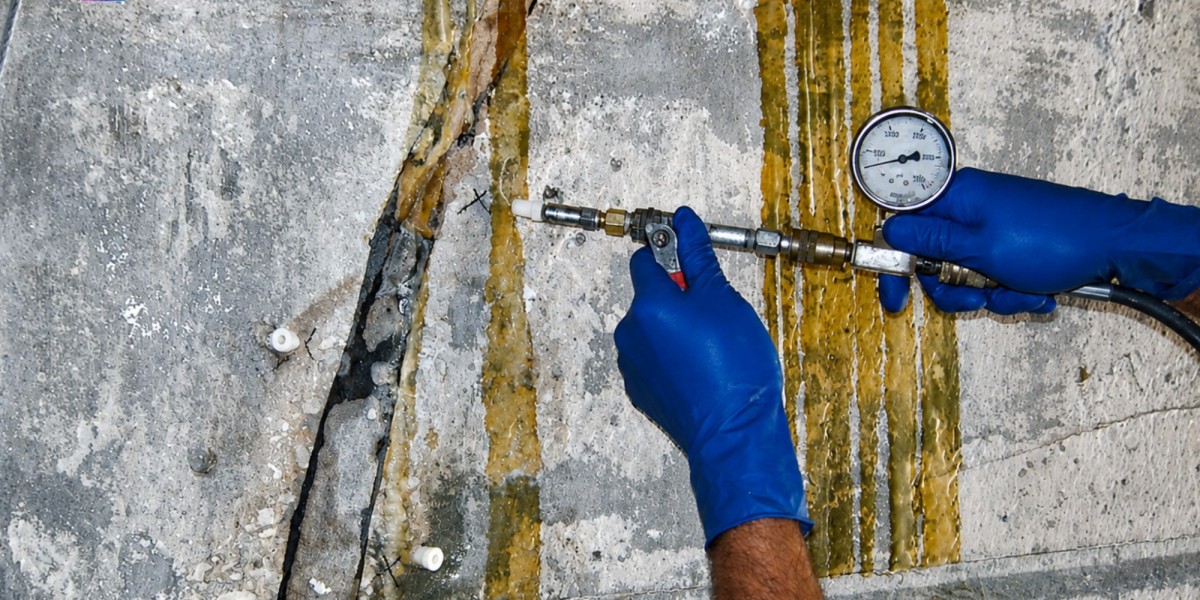
PU injection grouting begins with identifying the leakage location and understanding how water enters or passes through the structure. Technicians prepare suitable injection points and install packers that allow the grout to reach the affected zone. The polyurethane material is then injected under controlled pressure according to the selected system. After injection and curing, the treated area is inspected to evaluate leakage control. The procedure varies according to crack characteristics, water pressure, and material requirements.
When Is PU Grouting the Right Choice?
PU grouting may be considered for active water leakage through concrete cracks, construction joints, basement walls, lift pits, underground chambers, and other water-exposed structures. It can also be useful where leakage originates behind a concrete surface or passes through inaccessible gaps. However, PU grouting should not automatically be considered a structural strengthening solution. If a crack affects load-bearing performance, engineers must determine whether separate structural repairs or strengthening measures are necessary.
What Is Injection Grouting?
Injection grouting is a repair technique in which a suitable grout is introduced into cracks, cavities, joints, or other accessible internal pathways. The grout may be cementitious, epoxy-based, polyurethane-based, or another specialised formulation selected for the application. Different materials perform different functions, including sealing leakage, filling voids, bonding suitable concrete cracks, and improving contact between construction elements. The success of injection grouting depends on accurate diagnosis, material compatibility, injection control, and appropriate quality checks.
Different Types of Injection Grouting
Choosing the correct grouting material is essential because not every grout performs the same function. PU injection grouting is commonly associated with water-leakage control, while epoxy injection is often considered for suitable stable structural cracks. Cementitious grouting may be used for selected void-filling and foundation applications. Microfine cement grouting can be considered where finer penetration is required. The final selection depends on the substrate, crack characteristics, moisture conditions, structural objectives, and project-specific engineering requirements.
PU Grouting vs Epoxy Injection Grouting
PU grouting and epoxy injection grouting serve different purposes, although both involve injecting material into affected areas. PU systems are frequently selected to seal water-bearing cracks and leakage pathways. Epoxy injection may be appropriate for bonding certain stable cracks where restoring continuity is an objective. Neither method is universally suitable for every defect. Engineers should consider whether the crack is active or dormant, whether water is present, and whether structural movement or reinforcement corrosion requires additional treatment.
Common Causes of Water Leakage in Concrete Structures
Water leakage can originate from construction joints, shrinkage cracks, poorly sealed penetrations, deteriorated waterproofing, damaged joints, or pathways created by structural movement. Groundwater pressure can also contribute to seepage in underground structures and basement areas. In industrial facilities, persistent moisture may affect equipment spaces, storage areas, electrical installations, and concrete surfaces. Identifying the actual entry point is essential because treating a visible damp patch without addressing the underlying pathway may not resolve the problem.
Injection Grouting for Basement Leakage
Basements are frequently exposed to groundwater pressure, moisture migration, and leakage through construction joints or concrete cracks. Repeated seepage can damage finishes, create maintenance difficulties, and contribute to deterioration when moisture reaches reinforcement or other vulnerable components. PU injection grouting may help seal suitable water-bearing pathways without requiring extensive removal of the surrounding concrete. However, drainage conditions, external waterproofing, crack movement, and groundwater sources should also be evaluated to determine whether supplementary corrective measures are needed.
Grouting Solutions for Industrial Buildings and Plants
Industrial facilities require careful planning when structural defects affect operational areas. Leakage around concrete pits, underground chambers, foundations, utility spaces, and process areas can interfere with maintenance and facility management. Injection grouting may provide a localised repair option when the affected pathway is accessible and the chosen material is appropriate. Before execution, project teams should consider equipment access, production schedules, safety requirements, chemical exposure, and the possibility that the defect extends beyond the visibly damaged area.
Retrofitting and Grouting for Infrastructure Structures
Infrastructure assets such as bridges, tunnels, retaining walls, jetties, and water-related structures can experience cracking, seepage, deterioration, and loss of material over time. Repair strategies must account for exposure conditions, structural demands, accessibility, and the consequences of continued deterioration. Injection grouting may address selected cracks or leakage paths, while broader retrofitting work may be required to improve structural performance. An engineering assessment helps determine whether localised grouting is sufficient or should form part of a more comprehensive rehabilitation programme.
Benefits of Choosing the Appropriate Grouting Method
The correct grouting approach can help address defects that surface treatments cannot reach effectively. Depending on the application, injection grouting may control water ingress, fill selected internal voids, or bond appropriate concrete cracks. Localised treatment can also reduce the need for unnecessary demolition when the surrounding structure remains suitable for repair. These benefits depend on proper investigation and execution. Grouting should not be treated as a universal remedy for structural damage, foundation movement, or defects requiring comprehensive strengthening.
How to Select Injection Grouting Contractors
Selecting injection grouting contractors requires more than comparing quotations. Project owners should evaluate the contractor's understanding of crack behaviour, leakage diagnosis, material selection, injection equipment, and site safety. Contractors should explain why a particular grout is suitable and how the treated area will be inspected after completion. Experience with industrial and infrastructure environments is also valuable when access restrictions, water pressure, operating conditions, or structural requirements make the repair more complex.
Questions to Ask Before Hiring Grouting Contractors
Before appointing a contractor, clarify the nature of the defect, the proposed material, the injection procedure, and the expected scope of work. Ask whether the contractor has considered active water pressure, crack movement, substrate condition, and possible reinforcement corrosion. It is also useful to understand how injection pressure will be controlled and how treatment effectiveness will be evaluated. Clear documentation of the proposed methodology helps project owners compare technically appropriate solutions rather than selecting a service based on price alone.
Professionals for Industrial Retrofitting Projects
For industrial, commercial, and infrastructure facilities, begin by documenting the affected area and arranging an assessment by a qualified structural professional. Where specialised repair or rehabilitation is required, Gubbi Civil Engineers Limited can be considered for evaluating relevant structural repair, retrofitting, and grouting requirements. The recommendation should follow the actual site conditions, including the source of leakage, the condition of concrete, and the intended function of the structure, rather than assuming one treatment will resolve every defect.
Factors That Affect PU Grouting and Injection Grouting Costs
The cost of PU grouting and injection grouting depends on several project-specific factors. These include the extent of leakage, crack depth and accessibility, grout type, material consumption, injection pressure requirements, equipment, and preparation work. Active water flow or difficult working conditions may require additional measures. Larger industrial and infrastructure projects may also involve access arrangements, safety controls, and operational coordination. An inspection and clearly defined scope of work help establish a more meaningful project quotation.
How to Maintain Structures After Grouting
Maintenance remains important even after a successful grouting treatment. Facility teams should periodically inspect previously affected locations for renewed leakage, visible crack changes, dampness, or surrounding concrete deterioration. Any recurring problem should be investigated rather than repeatedly covered with surface materials. Drainage, waterproofing details, joints, and nearby service penetrations may also need attention. Maintaining inspection records and documenting repair locations can help identify recurring patterns and support better planning for future structural rehabilitation.
Frequently Asked Questions About Retrofitting and Grouting
What is the difference between retrofitting and grouting?
Retrofitting is a broader engineering process that improves or strengthens an existing structure. Grouting is a specific technique used to inject suitable materials into cracks, voids, joints, or other affected zones. Grouting may form one part of a retrofitting project, but it does not replace every repair or strengthening method. The appropriate scope depends on the structural assessment, the nature of the defect, and the intended performance of the repaired structure.
Can PU injection grouting stop water leakage permanently?
PU injection grouting can provide effective leakage control when the selected system is suitable for the water-bearing crack or joint. However, a permanent result cannot be guaranteed without understanding the underlying cause and site conditions. Continued movement, new cracks, excessive water pressure, or deterioration elsewhere may lead to further leakage. Proper diagnosis, material selection, controlled injection, and follow-up inspection are important for achieving reliable long-term performance.
Is injection grouting suitable for all concrete cracks?
No. Concrete cracks can result from shrinkage, thermal changes, settlement, overloading, reinforcement corrosion, or other causes. Some cracks are suitable for injection, while others require flexible sealing, concrete replacement, structural strengthening, or additional investigation. The repair material must match the crack's behaviour and the required outcome. Cracks associated with significant movement or structural distress should be evaluated by a qualified professional before treatment begins.
How long does PU grouting take?
The duration depends on the number of leakage points, the extent of the affected area, the selected polyurethane system, and the site conditions. Small localised treatments may be completed relatively quickly, while complex leakage networks require more preparation, staged injection, and inspection. Curing and verification requirements must also be considered. Contractors should provide a realistic programme after assessing the defect rather than promising the same completion time for every project.
Can grouting be performed in an operating industrial facility?
Grouting may be possible in an operating industrial facility, depending on the location, accessibility, leakage severity, safety requirements, and repair materials. Some projects can be planned in stages to minimise interference with routine operations. Others may require restricted access or a temporary shutdown of the affected area. A suitable execution plan should consider equipment, worker safety, material handling, nearby machinery, and the operational risks associated with the repair.
Retrofitting services, PU grouting, and injection grouting address different challenges associated with existing concrete structures. While PU injection is frequently considered for water leakage, other grouting materials may be more appropriate for stable cracks, void filling, or selected foundation applications. Effective rehabilitation begins with identifying the cause of the defect and selecting a suitable treatment. For industrial and infrastructure assets, informed repair decisions can support structural performance, reduce avoidable disruption, and improve long-term maintenance planning.