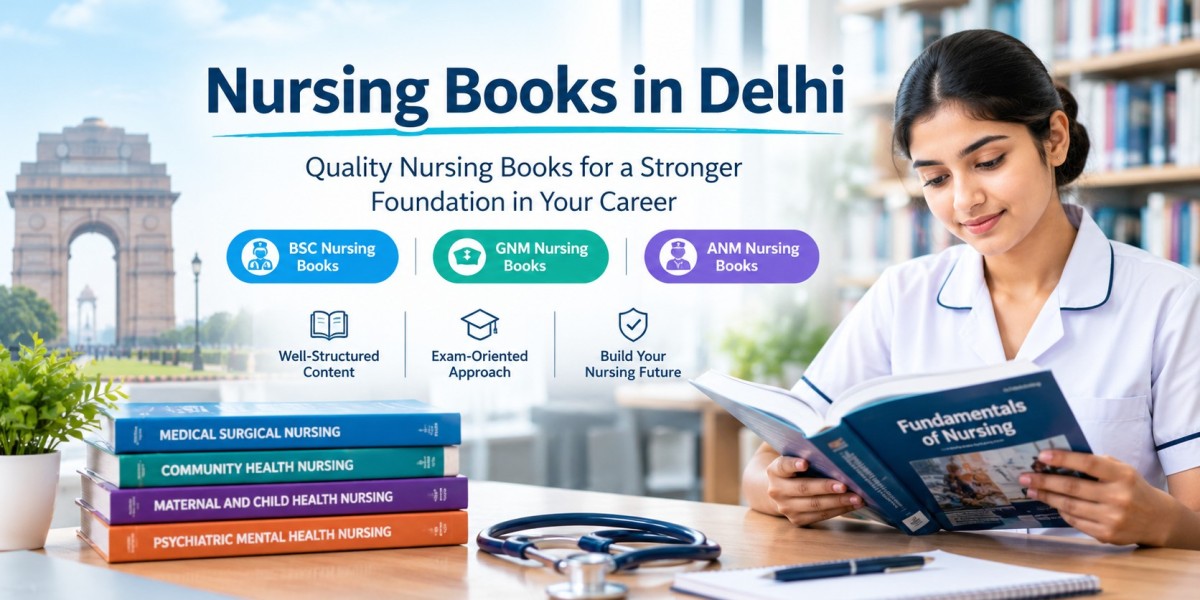

Nursing Books in Delhi: A Complete Guide for Nursing Students
Introduction to Nursing Books in Delhi
Every nursing student remembers the first week of college. New uniforms, new faces, a long syllabus, and a list of books that seems to grow by the day. Anatomy, fundamentals, pharmacology, community health. Where do you even begin?
The answer starts with your books. A good textbook does more than fill your bag. It explains difficult topics in plain language, shows you how procedures are done, and helps you prepare for exams without panic. If you are searching for Nursing Books in Delhi, this guide will help you understand what to look for, which books suit your course, and how to use them well.
Delhi is home to many nursing colleges and training institutes, so students from across the country come here to study. That also means a lot of choice, and too much choice can confuse anyone. Let us make it simple.
Importance of Choosing the Right Nursing Books
Nursing is not a subject you can learn only by listening in class. You need to read, revise, and understand the reasons behind every step you take at the bedside. The right book becomes your quiet teacher at home, in the hostel, or on the bus ride to the hospital.
What a Good Nursing Book Gives You
A good book supports both theory and practice. It should explain concepts clearly, use correct medical terms, and connect them to real nursing care. When you read about wound care, for example, the book should tell you not only what to do but also why you do it.
Features You Should Look For
- Clear and simple language
- Updated information based on current practice
- Neat diagrams and labelled illustrations
- Case studies and examples from real wards
- Practice questions at the end of each chapter
Updated Editions Matter
Medical knowledge keeps changing. Drug guidelines, care protocols, and teaching methods are revised from time to time. An old edition may still teach you the basics, but it can miss newer points that examiners expect you to know. Whenever possible, choose the latest edition recommended for your course.
Different Types of Nursing Books for Students
Nursing courses are not all the same. A first year BSc student needs different books from a GNM student, and an ANM student has another set of needs altogether. Let us look at each one.
BSC Nursing Books
BSC Nursing Books are meant for students in the four year undergraduate programme. This course is detailed and covers a wide range of subjects, so your book collection needs to be planned carefully.
Common subjects include:
- Anatomy and physiology
- Microbiology
- Nutrition and biochemistry
- Pharmacology
- Medical surgical nursing
- Community health nursing
- Child health nursing
- Mental health nursing
How to Select Books by Year
In the first year, focus on the foundation. Anatomy, physiology, nutrition, and fundamentals of nursing will form the base for everything that follows. In the second and third years, you will move toward pharmacology, medical surgical nursing, and specialty subjects. By the final year, you will need books on management, research, and advanced community health.
Keep Your University Syllabus Nearby
Different universities follow slightly different syllabi. Before buying any book, check your own syllabus and the reading list given by your college. That one step can save you a lot of money and confusion.
A Small Tip for First Year Students
Do not rush to buy every book in the first week. Start with the main subjects, attend a few classes, and ask your teachers which authors they prefer.
GNM Nursing Books
GNM Nursing Books are written for students of General Nursing and Midwifery. This course is practical in nature, so students need books that explain procedures step by step along with the theory behind them.
Important subjects include:
- Fundamentals of nursing
- Anatomy and physiology
- Maternal health nursing
- Child health nursing
- Community health nursing
- Mental health nursing
Theory Books and Practical Guides
GNM students spend a lot of time in hospital wards. Along with textbooks, a practical guide or procedure manual can be very helpful. It lets you revise steps such as bed making, vital signs, injections, and patient positioning before you go on duty.
Books for Exam Preparation
Exam focused books with solved questions and short notes are useful during revision. Use them as a support and not as a replacement for your main textbooks. Understanding a topic fully will always serve you better than memorising answers.
ANM Nursing Books
ANM Nursing Books are made for students of Auxiliary Nurse Midwifery. This course trains students to work closely with families and communities, especially in villages and primary health centres.
Key topics include:
- Maternal and child healthcare
- Community health practices
- Basic nursing procedures
- Nutrition and diet
- Health education and counselling
Choosing Books That Suit Your Level
ANM books should be easy to read, with short chapters and simple explanations. Many students come from different language backgrounds, so a book that uses plain English and clear pictures makes a big difference. Always match the book to your course syllabus and the guidelines of your nursing council.
How to Choose the Best Nursing Books
With so many titles on the shelf, how do you pick the right ones? Here is a simple checklist you can follow.
- Check the latest syllabus. Your syllabus is your map. Pick books that cover every unit in it.
- Look for clear explanations. If a chapter confuses you after two readings, the book may not be right for you.
- Review the diagrams. Good diagrams save hours of reading.
- Consider the author. Books written by experienced nursing teachers and practitioners are usually more reliable.
- Check the edition. A recent edition is generally the safer choice.
- Ask seniors and teachers. People who have already finished the course know which books actually helped.
Take a few minutes to flip through a book before you buy it. Read one topic you find difficult and see if it makes sense. That small test often tells you more than any review.
Benefits of Buying Nursing Books in Delhi
Students who search for Nursing Books in Delhi often do so for good reasons. The city has a strong presence of nursing colleges, hospitals, and academic resources, so the demand for quality study material is high.
Wide Choice in One Place
When you explore books in a city with many nursing institutes, you usually find a wider range of titles, editions, and publishers. This lets you compare two or three options for the same subject before you decide.
Comparing Editions and Prices
Prices can vary from one book to another, and so can editions. Taking time to compare helps you stay within your budget without compromising on quality. A newer edition may cost a little more, but it can be worth it when your exams depend on updated content.
Checking Availability Before You Buy
Some nursing books go out of stock quickly, especially at the start of a new session. It is wise to confirm availability early so that you are not left without a key textbook just before your internal exams.
Support for Different Course Levels
Whether you are a diploma student or someone planning to go further into postgraduate study, a good source of nursing books will usually have material for every stage. Students who plan to continue their studies can also browse through Nursing Books in Delhi meant for higher level courses once they are ready for the next step.
Essential Nursing Subjects Every Student Should Study
No matter which course you are in, some subjects form the backbone of nursing education. Make sure your book list covers these.
- Anatomy and physiology: Understand how the human body is built and how it works.
- Fundamentals of nursing: Learn basic care skills, hygiene, safety, and communication.
- Pharmacology: Know medicines, their uses, doses, and side effects.
- Medical surgical nursing: Study the care of adult patients with different illnesses and surgeries.
- Community health nursing: Learn how to promote health and prevent disease in a community.
- Mental health nursing: Understand emotional and psychological care.
- Maternal and child health nursing: Study the care of mothers, newborns, and children.
A student who builds strong knowledge in these areas will find advanced topics much easier later on.
Tips for Using Nursing Books Effectively
Buying books is only half the job. How you use them decides how much you learn.
Make a Realistic Study Timetable
Divide your subjects across the week and give difficult topics more time. A timetable you can actually follow is better than a perfect one you abandon in three days.
Write Short Notes
After finishing a chapter, write the main points in your own words. These short notes become a lifesaver during revision week.
Revise Diagrams and Procedures
Draw diagrams by hand and repeat nursing procedures aloud. This builds memory faster than only reading.
Practise Previous Exam Questions
Solving old question papers shows you how topics are asked and helps you manage your time during the real exam.
Link Theory With Clinical Practice
When you are on ward duty, think back to what you read. Seeing a condition in a real patient, under the guidance of your supervisor, makes the textbook come alive. This habit also builds confidence.
Common Mistakes to Avoid When Buying Nursing Textbooks
Many students make the same errors year after year. You can avoid them with a little planning.
- Buying without checking the syllabus. This is the most common mistake and the most costly.
- Choosing outdated editions. Old books may miss new guidelines.
- Collecting too many reference books. More books do not mean more marks. A few good ones, studied well, are enough.
- Ignoring practical guides. Skills matter as much as theory in nursing.
- Depending on a single resource. One book rarely covers everything. Use a main textbook along with a short revision guide.
Frequently Asked Questions About Nursing Books
Which books are useful for BSc Nursing students?
The best choice depends on the subject, semester, university syllabus, and the reading list given by your college. Start with the core textbook for each subject and add reference books only when needed.
How can GNM students select the right nursing books?
Choose books that cover the full GNM syllabus and include practical procedures. A theory textbook along with a practical guide usually works well for most students.
What subjects should ANM nursing students focus on?
ANM students should give special attention to maternal and child health, community healthcare, basic nursing skills, nutrition, and health education. These are the areas they will use most in real work.
How can students find suitable nursing textbooks in Delhi?
Compare availability, editions, prices, and syllabus coverage before you buy. Ask your teachers and seniors for suggestions, and always check that the book matches your course.
Conclusion
Choosing the right books is one of the smartest steps a nursing student can take. Good books make learning easier, exam preparation smoother, and clinical practice more confident. Whether you are studying for a BSc, GNM, or ANM course, the key is to pick material that matches your syllabus, is clearly written, and fits the way you learn.
If you are searching for Nursing Books in Delhi, take your time, compare your options, and buy only what you need. A few well chosen books, studied with a steady routine, will take you much further than a shelf full of unread titles. Your books are the beginning of your nursing journey, so choose them with care and keep learning every day.