
What if the warning signs of a serious health condition were recognized months or even years before a woman received her diagnosis?
For many women, getting the right diagnosis is not always straightforward. Symptoms such as pelvic pain, irregular periods, fatigue, and hormonal changes may be overlooked, misunderstood, or attributed to everyday stress.
The consequences can be significant. According to the World Health Organization (WHO), endometriosis affects approximately 190 million women of reproductive age worldwide, and diagnosis can take between 4 and 12 years.
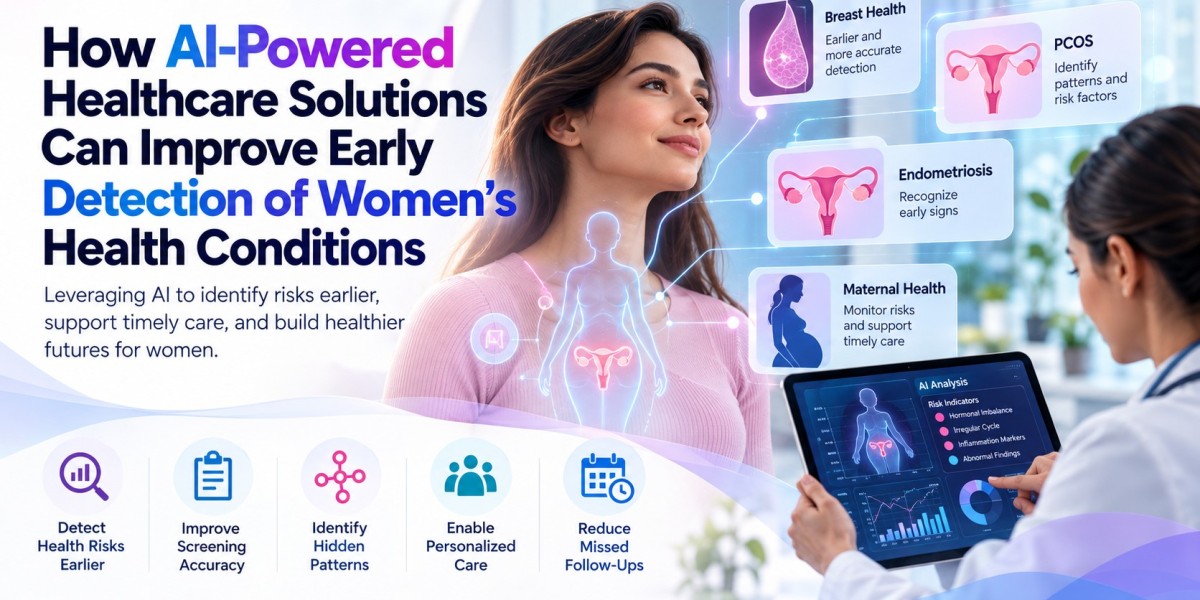
This is where AI in women's healthcare offers a promising opportunity. By helping healthcare professionals recognize patterns, interpret medical information, and identify potential warning signs, AI-powered solutions could support earlier investigations and more timely care.
But how does this technology work, and where can it make a meaningful difference?
Why Are Women's Health Conditions Often Detected Late?
Many women's health conditions share similar symptoms, making early identification challenging.
For instance, irregular menstrual cycles may be associated with polycystic ovary syndrome (PCOS), thyroid disorders, or other hormonal conditions. Persistent pelvic pain may have several possible causes, including endometriosis.
Diagnosis becomes even more difficult when information is scattered across different healthcare providers, laboratory reports, and patient records.
Common challenges include:
Symptoms being overlooked or normalized.
Limited access to specialists.
Fragmented medical histories.
Delays in screening and follow-up appointments.
Difficulty recognizing changes in symptoms over time.
Addressing these problems requires more than advanced diagnostic equipment. Healthcare providers also need better ways to connect information and identify patients who may require further evaluation.
How AI-Powered Healthcare Solutions Support Early Detection
1. Identifying Patterns in Patient Health Data
A single symptom may not reveal much. However, changes recorded across several months can provide valuable clinical context.
AI-powered systems can analyze relevant medical histories, laboratory results, symptom records, and other health information to identify patterns that deserve attention.
For example, repeated reports of severe menstrual pain, gastrointestinal symptoms, and missed workdays could prompt further evaluation for endometriosis.
AI cannot confirm such a diagnosis on its own, but it may help clinicians recognize information that deserves closer investigation.
2. Supporting Breast Cancer Screening
Medical imaging is one of the more established areas of AI-assisted healthcare.
AI-based imaging tools can help identify suspicious findings in mammograms and highlight areas that radiologists may need to review more closely.
Research into AI-assisted breast screening has shown promising results for certain tools and clinical workflows, although performance varies.
Importantly, these systems support qualified healthcare professionals rather than replace their interpretation.
When properly evaluated and integrated into screening programs, AI may help improve consistency and manage imaging workloads.
3. Recognizing Potential Hormonal Health Concerns
Conditions such as PCOS can involve several symptoms, including irregular menstrual cycles, acne, and metabolic changes.
Digital healthcare platforms can organize patient-reported symptoms alongside relevant medical information, helping clinicians observe trends across appointments.
AI-powered decision-support tools may also help highlight combinations of findings that warrant further assessment.
However, cycle-tracking data or AI-generated predictions are not sufficient to diagnose PCOS. Clinical evaluation and appropriate testing remain essential.
4. Improving Maternal Health Monitoring
Pregnancy-related complications can develop between scheduled prenatal appointments.
Connected healthcare solutions can bring together blood pressure readings, glucose measurements, patient-reported symptoms, and relevant medical records.
AI-assisted monitoring systems may help identify concerning trends and alert healthcare teams when additional assessment is needed.
For example, unusual blood pressure patterns could trigger a clinical review for possible pregnancy-related complications.
The goal is to support timely communication and appropriate intervention, not to replace prenatal examinations or emergency medical care.
5. Reducing Missed Follow-Ups Through Connected Care
Early detection depends not only on identifying warning signs but also on ensuring patients receive appropriate follow-up care.
An abnormal screening result has limited value if the patient does not receive the recommended next assessment.
AI-enabled healthcare platforms can support administrative tasks such as identifying outstanding follow-ups, organizing care information, and reminding teams about pending reviews.
When integrated with electronic health records and appointment systems, these capabilities can help healthcare organizations address gaps in care coordination.
What Should Healthcare Providers Consider Before Adopting AI?
Although AI offers meaningful possibilities, successful adoption requires careful planning.
Healthcare organizations should prioritize:
Clinical validation: Evaluate whether an AI tool performs reliably for its intended medical use.
Data privacy: Protect sensitive patient information through appropriate security and access controls.
Bias assessment: Check performance across relevant patient populations to reduce the risk of unequal outcomes.
System integration: Connect AI capabilities with existing clinical workflows rather than creating disconnected applications.
Human oversight: Keep qualified healthcare professionals responsible for medical decisions.
Technology should make clinical care more informed and accessible, not introduce unnecessary complexity.
The Future of AI in Women's Healthcare
The future of women's healthcare is not about replacing doctors with algorithms. It is about giving healthcare teams better information, improving coordination, and helping patients receive attention when concerning symptoms arise.
As digital health platforms evolve, AI could increasingly support personalized screening workflows, longitudinal symptom monitoring, and earlier identification of patients who may need further evaluation.
For healthcare organizations, the opportunity lies in developing secure, connected, and clinically responsible solutions that address real patient needs.
Final Thoughts
Delayed diagnosis remains a serious challenge in women's healthcare, particularly for conditions with overlapping or frequently misunderstood symptoms.
AI-powered healthcare solutions offer promising ways to support medical imaging, organize patient information, recognize concerning patterns, and improve follow-up coordination.
However, technology alone cannot solve every diagnostic challenge. Progress also depends on clinical expertise, equitable access to care, reliable data, and responsive healthcare systems.
The real value of AI in women's healthcare lies in helping clinicians recognize potential problems sooner, investigate them appropriately, and ensure women receive the care they need.




