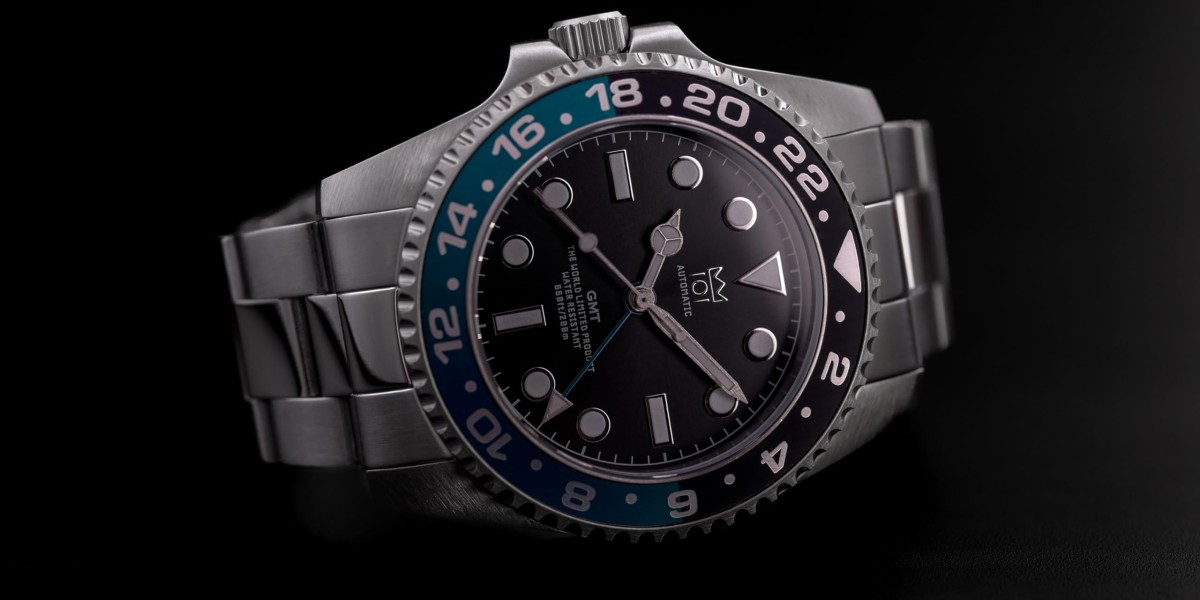

Keeping track of another time zone can become part of everyday life. You might work with overseas clients, travel regularly, or have family living abroad. A GMT watch puts that information on your wrist, making it easier to check another location’s time without reaching for your phone. Although the extra hand and numbered bezel can look complicated initially, the basic idea is straightforward. Understanding how the display works helps you decide whether this useful feature belongs in your next watch.
What Is a GMT Watch?
GMT stands for Greenwich Mean Time. In watchmaking, the term commonly describes a watch that can display another time zone alongside the main time.
A typical analog model has standard hour and minute hands, plus an additional hand that completes one rotation every 24 hours. You read this extra hand against a corresponding 24-hour scale.
The main hands usually show your local time, while the additional hand tracks home or another location. Despite its name, the extra hand does not have to remain set to Greenwich Mean Time. Its purpose is to provide a useful second reference.
How to Read the Additional Hand
Reading the display becomes easier when you separate the two scales. Read the main hands normally, using the familiar twelve-hour dial. Then follow the additional hand to the twenty-four-hour markings.
For example, if the extra hand indicates 18 on its scale, the hour in the tracked location is six in the evening. The minute hand supplies the minutes when both locations share the same minute offset.
This distinction also helps you recognize morning and evening immediately. A reading near 6 means early morning, while a reading near 18 means evening. That can prevent an inconvenient call to someone overseas.
Caller GMT and Traveler GMT Explained
Two common movement arrangements affect how you adjust the watch.
A caller GMT allows the additional twenty-four-hour hand to be adjusted independently. This arrangement is convenient when you stay in one location but regularly monitor the time elsewhere.
A traveler GMT allows the main local hour hand to move independently, typically in one-hour steps. When you arrive in another time zone, you can adjust local time while keeping your home-time reference.
Neither arrangement is automatically better for everyone. Choose according to how you expect to use the watch, and check the manufacturer’s setting instructions before operating the crown.
What Does the Rotating Bezel Do?
Some models place the twenty-four-hour scale on a rotating bezel. Turning that bezel changes the time reference read against the additional hand.
Depending on the design, a watch with both a fixed twenty-four-hour scale and a rotating bezel can let you reference a third time zone. However, this requires correct setup and an understanding of the relevant time differences.
A two-color bezel can also provide a visual division between daytime and nighttime hours. The colors themselves do not create the GMT function. The movement, additional hand, and appropriate scale perform the actual timekeeping task.
Choosing Features That Suit Your Routine
Start with readability. The additional hand should be easy to distinguish from the regular hands, especially when they overlap. Clear markings and good contrast matter more than decorative complexity.
Next, consider comfort. Case thickness, bracelet fit, and overall weight influence whether you enjoy wearing the watch throughout the day. Try it beneath a shirt cuff if you expect to wear it at work.
Movement choice matters too. Quartz can suit someone who values straightforward ownership, while mechanical options may appeal to enthusiasts who enjoy the movement itself. Compare individual specifications rather than assuming all GMT models offer similar performance.
Remember Daylight Saving and Unusual Offsets
A conventional GMT watch generally does not update itself when a location changes its clocks for daylight saving. You need to check the current difference and adjust the relevant display when necessary.
Another consideration is fractional time zones. Some locations differ by thirty or forty-five minutes rather than whole hours. A movement with only whole-hour independent adjustments may not directly display every combination.
If you regularly track such a location, confirm the watch’s capabilities before buying. This detail is especially important when the feature will support work schedules, travel arrangements, or frequent communication with family.
Is It the Right Watch for You?
A GMT watch makes sense when a second time zone is information you regularly need. Frequent travelers, international colleagues, and families living apart can all find the display useful.
Before choosing, decide which adjustment style suits your routine, check legibility, and confirm the fit. Consider servicing and everyday care alongside appearance.
The most satisfying choice is one you understand and enjoy wearing. A clear display and suitable movement turn an interesting complication into a practical everyday companion.




