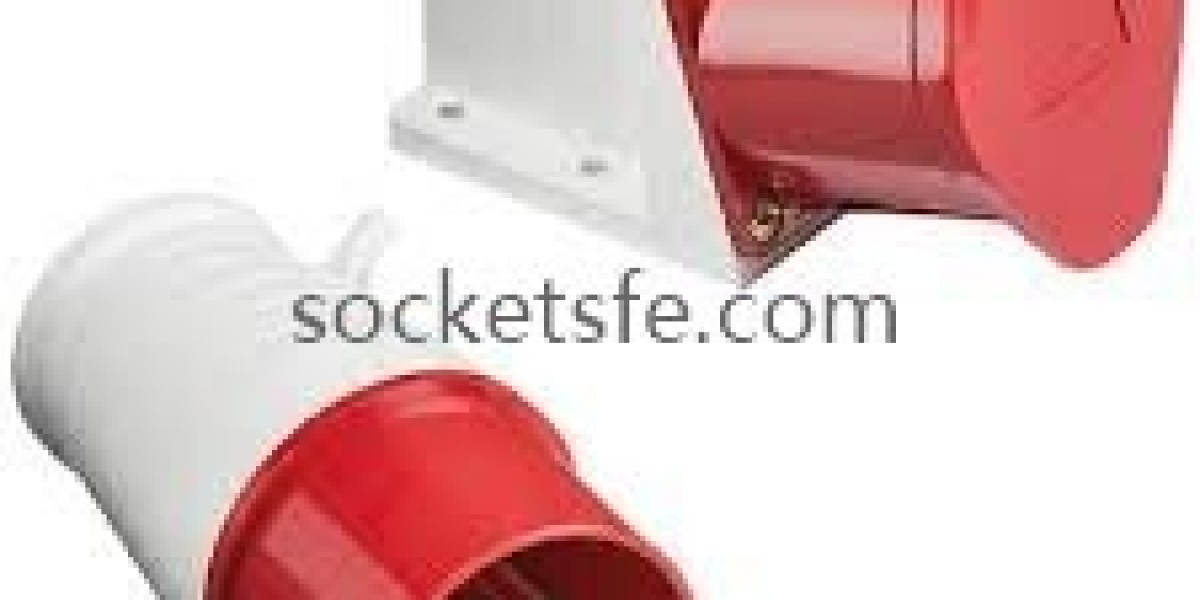

Industrial electrical connections often operate in environments where dust, moisture, and regular equipment handling can affect service reliability. Manufacturing plants, outdoor work areas, food processing facilities, and maintenance workshops may require connectors with clearly defined environmental protection. An IP67 Industrial Plug is designed to meet the IP67 ingress protection classification when tested under the applicable conditions, providing complete protection against dust ingress and protection against temporary immersion in water within the specified test limits. Correct product selection still depends on the installation environment, electrical requirements, and compatibility with the mating socket.
The housing forms the first protective layer around the connector's internal components. Manufacturers may use engineering thermoplastics or other durable materials selected for insulation performance, mechanical strength, and resistance to ordinary industrial wear. Material selection should reflect the expected exposure to temperature changes, vibration, cleaning agents, and handling during installation or maintenance. A well-designed enclosure also supports contact alignment and cable entry, helping the connector maintain its intended structure during normal use. Buyers should review the product documentation to understand the materials and operating conditions for which the housing is designed.
Sealing technology is essential to achieving the intended ingress protection. Gaskets, fitted covers, cable-entry seals, and carefully designed mating surfaces help limit the entry of dust and water. However, the stated protection level applies only under defined test conditions and may depend on correct assembly and the specified mating components. A connector rated IP67 should not automatically be treated as suitable for continuous underwater use, high-pressure washing, or every chemical cleaning process. Procurement teams should verify whether the complete connected assembly maintains the required protection in the actual installation.
The internal contact system is equally important. Conductive components may use copper or copper alloys because of their electrical conductivity and mechanical properties. Contact geometry supports proper engagement with the corresponding socket, while suitable surface finishes can help manage oxidation and wear during repeated connection cycles. Insulating components maintain separation between conductive parts and support electrical safety. Contact arrangements, rated voltage, current capacity, and grounding provisions must all match the equipment and power supply. Environmental protection cannot compensate for an incompatible electrical configuration or an incorrectly installed connection.
Industrial applications vary in their exposure to contaminants. Outdoor machinery may face rainfall, airborne dust, and changing weather, while workshops can experience debris and occasional water splashes. Certain production environments require connectors that can tolerate routine cleaning, although chemical compatibility and cleaning pressure must be checked separately. In mobile equipment applications, resistance to mechanical handling and secure cable retention may be equally important. Buyers should assess the complete operating environment before deciding whether IP67 protection is necessary or whether another protection level would better match the application.
Cable installation has a direct influence on connection reliability. The cable diameter must fit the connector's entry and sealing arrangement, while the conductor type and size must comply with the manufacturer's requirements. Proper strain relief helps reduce mechanical stress on terminal connections, and correct assembly helps preserve the intended seal. Installers should follow the wiring diagram, terminal markings, and specified assembly procedures. Electrical work must also comply with relevant regulations, including appropriate protective earthing and circuit protection where required.
For industrial distributors and equipment manufacturers, consistent documentation makes it easier to compare products and manage sourcing. Important details include the ingress protection rating, rated voltage and current, pole configuration, cable compatibility, mating socket, and applicable standards. Buyers should also confirm whether the rating applies to the plug alone, the connected assembly, or a particular installation arrangement. This distinction is useful when specifying connectors for projects that involve outdoor machinery, production equipment, or other environments with regular exposure to dust and water.
When evaluating an IP67 Industrial Plug, buyers should consider ingress protection alongside electrical ratings, material suitability, cable installation, and socket compatibility. Matching these factors helps ensure that the connector is appropriate for its intended operating conditions. For industrial plugs, sockets, and related power connection products, visit https://www.socketsfe.com to explore available configurations for equipment integration and industrial applications.