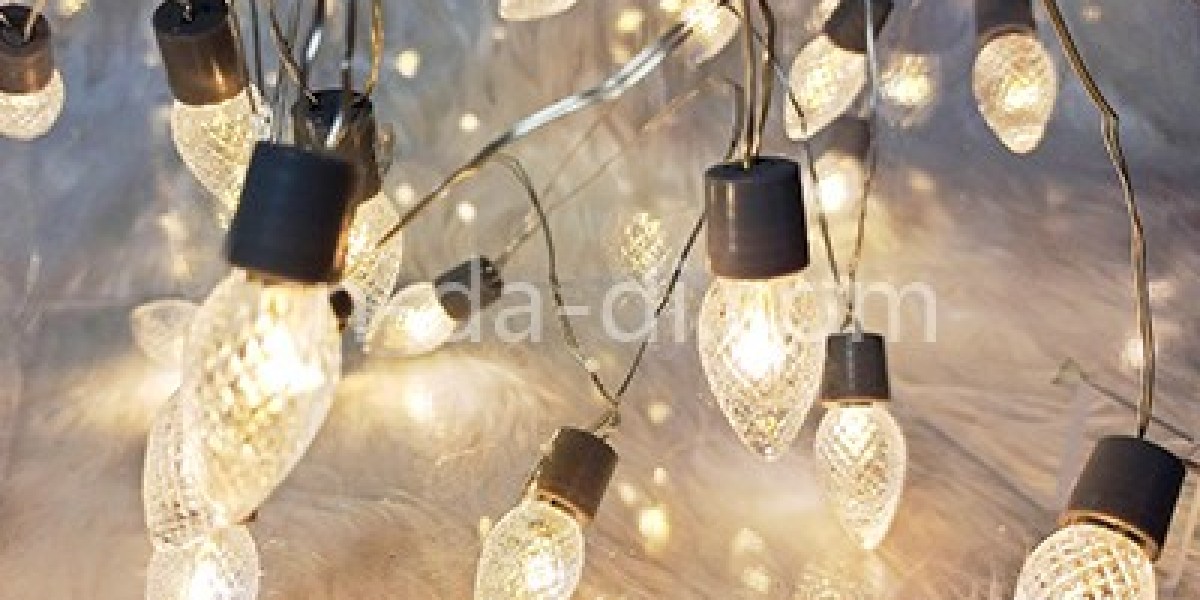

Fine conductive wires allow decorative lighting to be integrated into detailed seasonal arrangements, and LED Copper Wire Christmas Lights combine compact LED sources with flexible wire construction for this purpose. The slim structure can be shaped around Christmas trees, ornaments, wreaths, window frames, display fixtures, and other decorative objects. This makes copper-wire lighting suitable for homes, retail environments, hotels, restaurants, event venues, and commercial holiday projects.
Copper is widely used in electrical applications because of its good conductivity and workable physical properties. In decorative lighting, a copper conductor can be manufactured in a relatively fine form while still carrying electrical current to distributed LED sources. The conductor is normally covered with an insulating layer that separates it from surrounding materials and supports safe operation under the product's specified conditions.
LED technology works particularly well with fine-wire construction because individual LEDs can be made compact enough to occupy limited space. Rather than depending on large lamp housings, manufacturers can distribute small light sources along the wire at selected intervals. This allows the lighting to provide many points of illumination while keeping the overall product lightweight and visually unobtrusive.
Flexibility is one of the main practical benefits of LED Copper Wire Christmas Lights. Installers can wrap fine wire around tree branches, form it around wreaths, follow display contours, or place it inside transparent decorative containers. The wire can also be incorporated into table arrangements and seasonal centerpieces. However, flexibility does not mean the wire should be subjected to excessive pulling, sharp bends, or repeated mechanical stress.
Light color influences the visual relationship between the lighting and surrounding decorations. Warm white LEDs can support traditional Christmas themes and work naturally with wood, greenery, fabric, and metallic ornaments. Cool white lighting can create a more contemporary winter appearance, while multicolor options may suit playful seasonal displays. The selected color should be evaluated alongside ambient lighting and the materials used in the complete decoration.
Retail displays can benefit from the small physical profile of fine-wire lighting. Store windows, shelves, product arrangements, and decorative structures can be illuminated without placing bulky fixtures in front of merchandise. Lighting can be wrapped around a seasonal centerpiece or positioned behind transparent objects to create additional depth. Because the wire is relatively subtle, it can become part of the decoration instead of dominating the visual composition.
Commercial hospitality spaces offer similar opportunities. Hotels and restaurants may incorporate fine-wire lighting into reception areas, dining spaces, entrances, or holiday-themed displays. Event organizers can use it for temporary backdrops, table decoration, photo areas, and stage surroundings. In each application, cable routing and connection placement should be planned to reduce unnecessary mechanical stress and avoid creating obstacles for visitors.
The surrounding environment should also influence product selection. Indoor installations normally experience controlled conditions, while outdoor displays may encounter rain, humidity, dust, wind, and temperature changes. Products should be chosen according to their specified environmental application. Power supplies, connectors, and extension components should also be compatible with the complete lighting system rather than evaluated separately.
Manufacturing quality affects the consistency of fine-wire lighting. LED spacing, conductor processing, insulation coverage, soldering or connection quality, and connector assembly can all influence the finished product. Manufacturers may conduct continuity checks, LED operation tests, visual inspections, and insulation checks during production. Consistent quality becomes especially important when multiple lighting strings are installed together across a large Christmas display.
Safety should remain a basic requirement during installation and operation. Users should inspect the complete string before use and replace products showing damaged insulation, broken connections, or other visible defects. Compatible electrical components should be used according to the manufacturer's instructions. Where lighting is installed around seasonal materials such as fabric or artificial foliage, users should also ensure that the arrangement does not introduce unsuitable heat or electrical risks.
Storage practices can influence future usability. After Christmas displays are removed, the wire should be gathered carefully rather than pulled into tight knots. Individual LEDs and connectors should be protected from impact, and the lighting should be kept in an appropriate environment between seasonal uses. Organized storage can reduce tangling and make future installation more efficient.
For buyers, distributors, and seasonal display designers, evaluating copper-wire Christmas lighting involves more than selecting a decorative appearance. Conductor material, insulation, LED spacing, light color, flexibility, connection design, electrical compatibility, and environmental suitability all affect practical use. Additional Christmas lighting solutions can be explored at https://www.cn-da-di.com/product/other-christmas-lights/ when comparing options for different seasonal projects.







