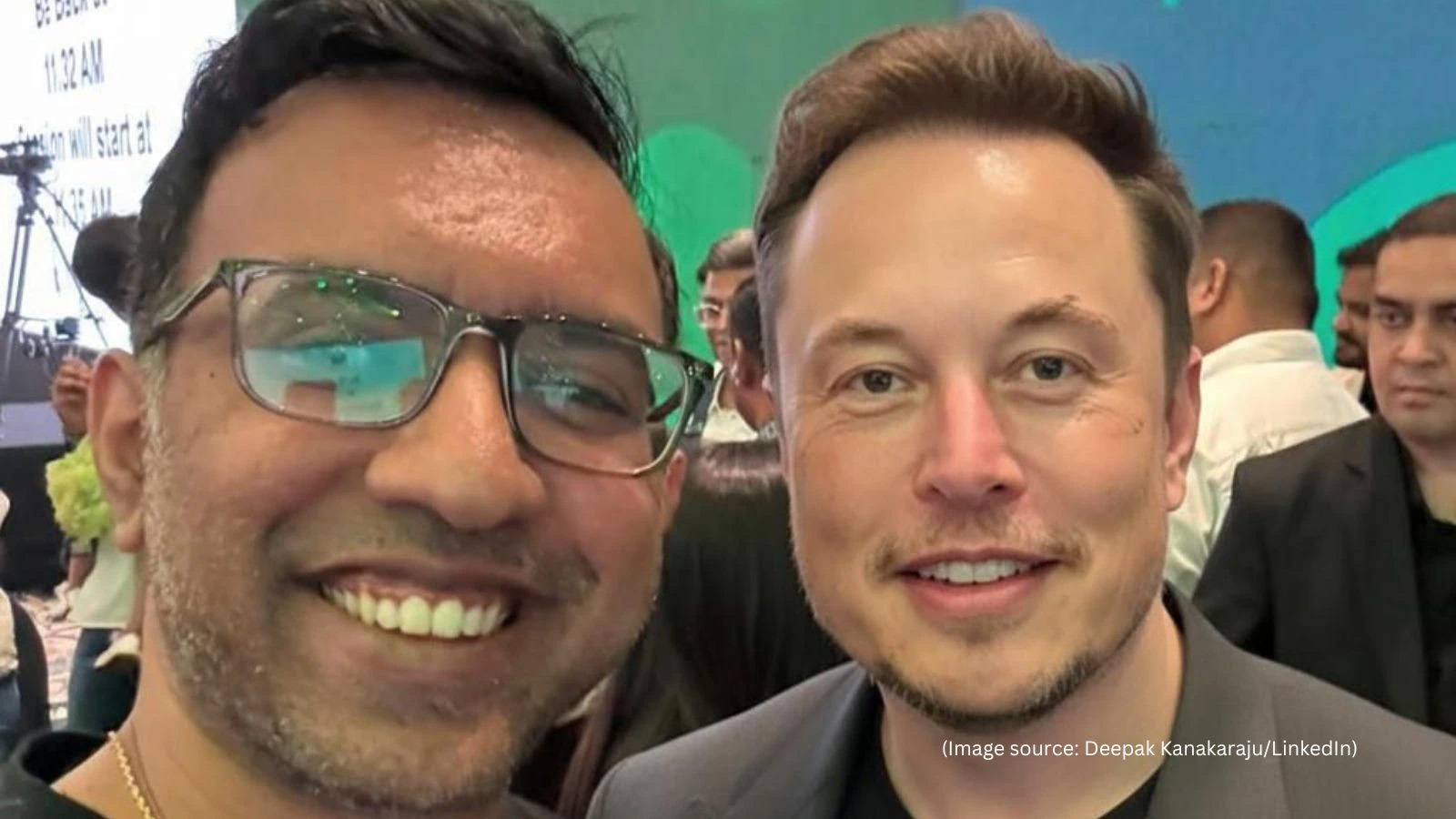
In a world where social media can turn anything into viral gold, it’s no surprise that a recent image of Bengaluru-based founder Deepak Kanakaraju posing for a ‘selfie’ with tech mogul Elon Musk has taken the internet by storm. The photo — which looks almost too perfect to be true — was shared by Deepak himself, sparking immediate excitement and curiosity among his followers. But there’s a twist: it’s not a real selfie.
Yes, the image that has been circulating online is AI-generated. And while Deepak’s playful commentary on this tech experiment is entertaining, it also raises important questions about how easily the lines between reality and fiction are becoming blurred in the digital age. Let’s dive into the story, the implications, and why this AI-generated ‘selfie’ is making waves.
The ‘Selfie’ That Got Everyone Talking
At first glance, the image seems like a dream come true for any tech enthusiast. Deepak Kanakaraju, a well-known digital marketer and entrepreneur based in Bengaluru, is seen casually posing alongside Elon Musk, the billionaire CEO of Tesla and SpaceX. The two appear to be enjoying a friendly moment, with Deepak sporting a grin and Musk looking as charismatic as ever. The composition is flawless, the lighting impeccable, and both faces look entirely lifelike.
The post quickly caught the attention of Deepak’s followers, who were quick to share and comment on the ‘selfie’. The image seemed to suggest that he had met Musk, perhaps during a business event or some groundbreaking tech collaboration. It was the kind of content that would naturally go viral—an exciting blend of two icons from the world of technology and innovation.
But then came the reveal: It was all an illusion.
The Twist: An AI-Generated Selfie
In his follow-up post, Deepak clarified the situation with a witty caption. The image wasn’t real; it was an AI-generated creation, designed to demonstrate how advanced artificial intelligence has become in generating hyper-realistic images. Deepak had used an AI tool to create the ‘selfie’ of him and Elon Musk, and what was once a fun experiment soon turned into a conversation about the implications of AI in media and digital storytelling.
The revelation sparked widespread intrigue. Some of his followers were in on the joke, while others were left in disbelief. The image was so convincingly real that it was hard for many to immediately tell it was generated by AI.
Why the AI-Generated Selfie Matters
While Deepak’s intention may have been lighthearted, his AI-generated selfie holds a mirror up to the growing power of artificial intelligence and its impact on how we consume media. Here’s why it matters:
1. Blurred Lines Between Reality and Fiction
AI’s ability to create hyper-realistic images, videos, and even voice recordings is advancing at an astonishing rate. With technologies like GANs (Generative Adversarial Networks) and deep learning, it’s becoming increasingly difficult to tell what’s real and what’s artificially created. Deepak’s experiment is a prime example of how easily a fake image can pass as genuine. In the age of digital media, this poses significant risks, especially when it comes to the spread of misinformation.
2. The Rise of ‘Deepfakes’
Deepfake technology, which uses AI to manipulate videos and images to make them appear real, has already caused major concerns. Political figures, celebrities, and public personalities have been targeted by deepfakes designed to mislead the public or create controversy. As AI technology continues to improve, the potential for malicious use increases. Deepak’s ‘selfie’ is a more innocent use of AI, but it demonstrates how easily deepfakes can be created and shared.
3. Impact on Trust and Authenticity
One of the key takeaways from this experiment is the growing need for media literacy. In a world where AI can manipulate images with near-perfection, it’s essential for individuals to question the authenticity of the content they encounter online. What happens to our ability to trust the media when visual evidence can so easily be fabricated? This challenge goes beyond social media—it’s about the integrity of information and how it shapes public opinion.
4. The Role of AI in Content Creation
Deepak’s playful ‘selfie’ also brings attention to the increasing role AI plays in content creation. In fields like marketing, entertainment, and journalism, AI tools are now being used to generate everything from realistic images and videos to written content. While this offers endless creative possibilities, it also raises questions about ethics, responsibility, and the potential for manipulation.
What This Means for the Future of Digital Media
Deepak’s AI-generated selfie is more than just a fun social media post—it’s a wake-up call for how AI is poised to shape the future of digital media. As artificial intelligence becomes more integrated into our lives, the distinction between reality and digital creation will continue to fade. Here are a few key implications to consider moving forward:
- A New Era of Media Literacy: We’ll need to become more discerning consumers of digital content. Knowing how to spot AI-generated material and understanding its potential for manipulation will be key in navigating the digital landscape.
- Ethical Concerns: With AI’s power to create realistic content comes a responsibility. Developers and users alike must consider the ethical implications of AI-generated images and videos, especially when it comes to matters of privacy, consent, and misinformation.
- AI in Content Creation: As AI tools become more accessible, creators will need to strike a balance between innovation and integrity. While AI can be used for everything from entertainment to advertising, ensuring that AI-generated content is clearly labeled and transparent will be important in maintaining public trust.
- The Need for Regulation: Governments and tech companies will likely need to implement more robust regulations around the use of AI in digital media. This could include AI detection tools to help identify manipulated content, as well as laws to prevent the malicious use of AI to spread false information.
Conclusion: A Lighthearted Experiment With Serious Implications
At the end of the day, Deepak Kanakaraju’s AI-generated selfie with Elon Musk is a clever and harmless stunt. It highlights the impressive capabilities of modern AI, as well as the potential risks it poses in the realm of digital media. While it may have been a fun way to engage with his audience, it serves as a reminder that we need to be more vigilant about the content we consume and share online.
As AI continues to evolve, so too must our understanding of its impact on society. In the age of deepfakes, AI-generated content, and digital deception, trust and authenticity in the media are more important than ever.
So, the next time you come across a viral photo or video, remember to ask yourself: Is it real, or is it AI? The future of digital media is exciting, but it’s also one that requires careful navigation.